
Last updated September 20, 2026
Full 25-point door and opener safety check with every visit - springs, cables, rollers, tracks, and your LiftMaster or Chamberlain opener included
You get a price before we start. It does not change when the truck arrives.
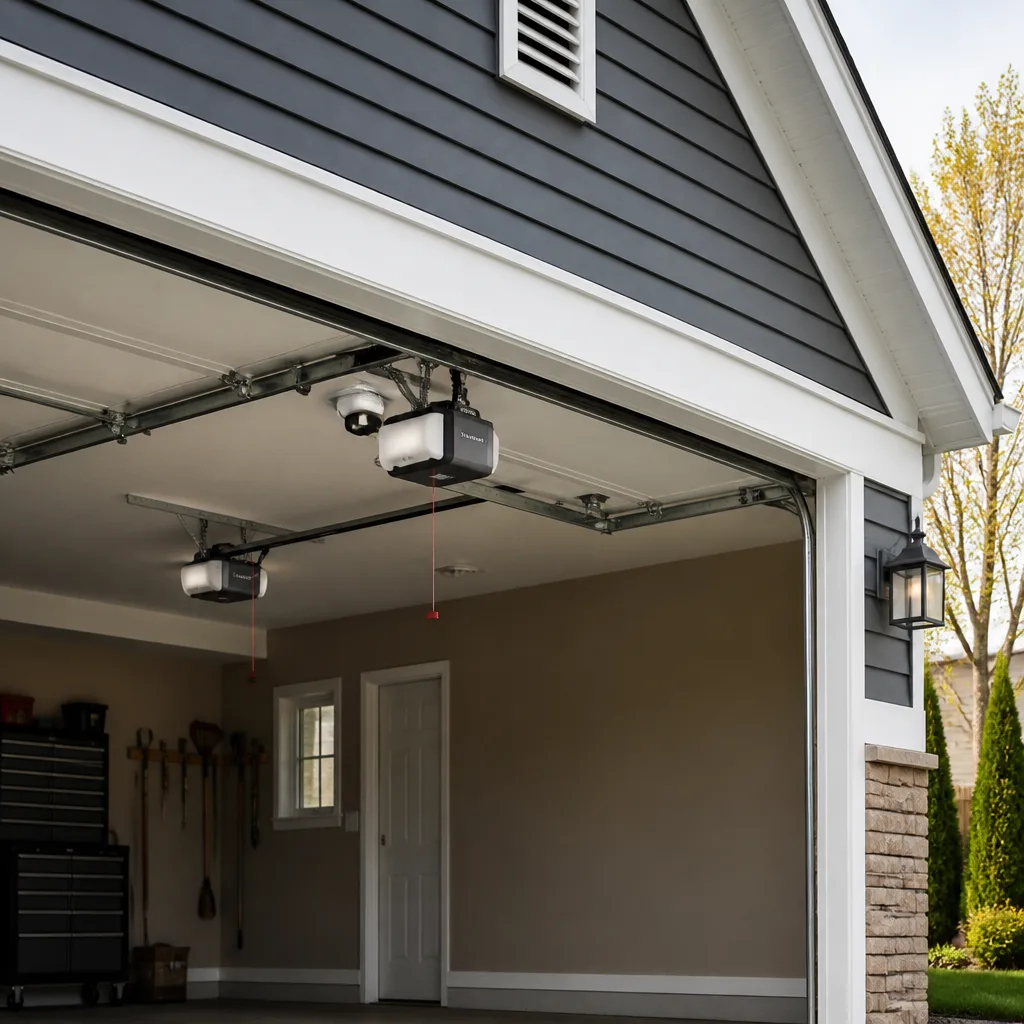
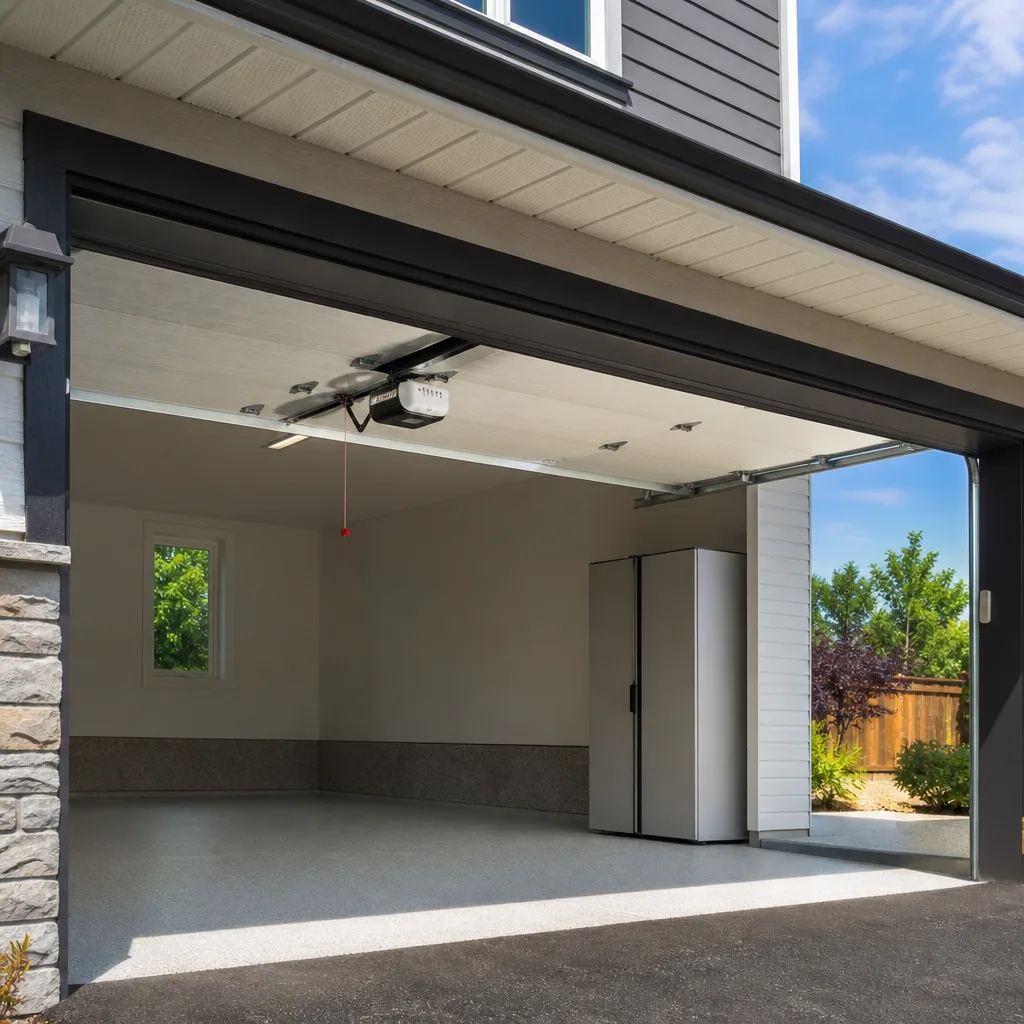
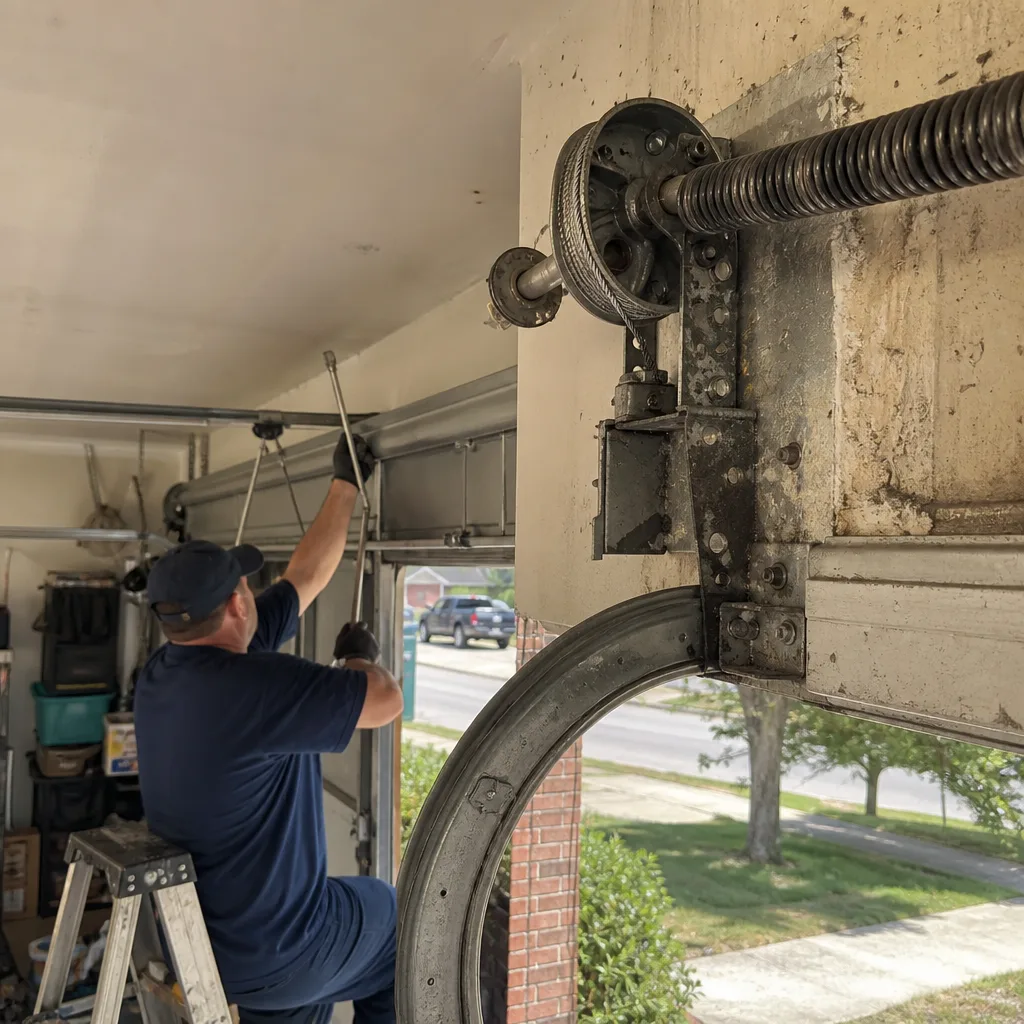 Before
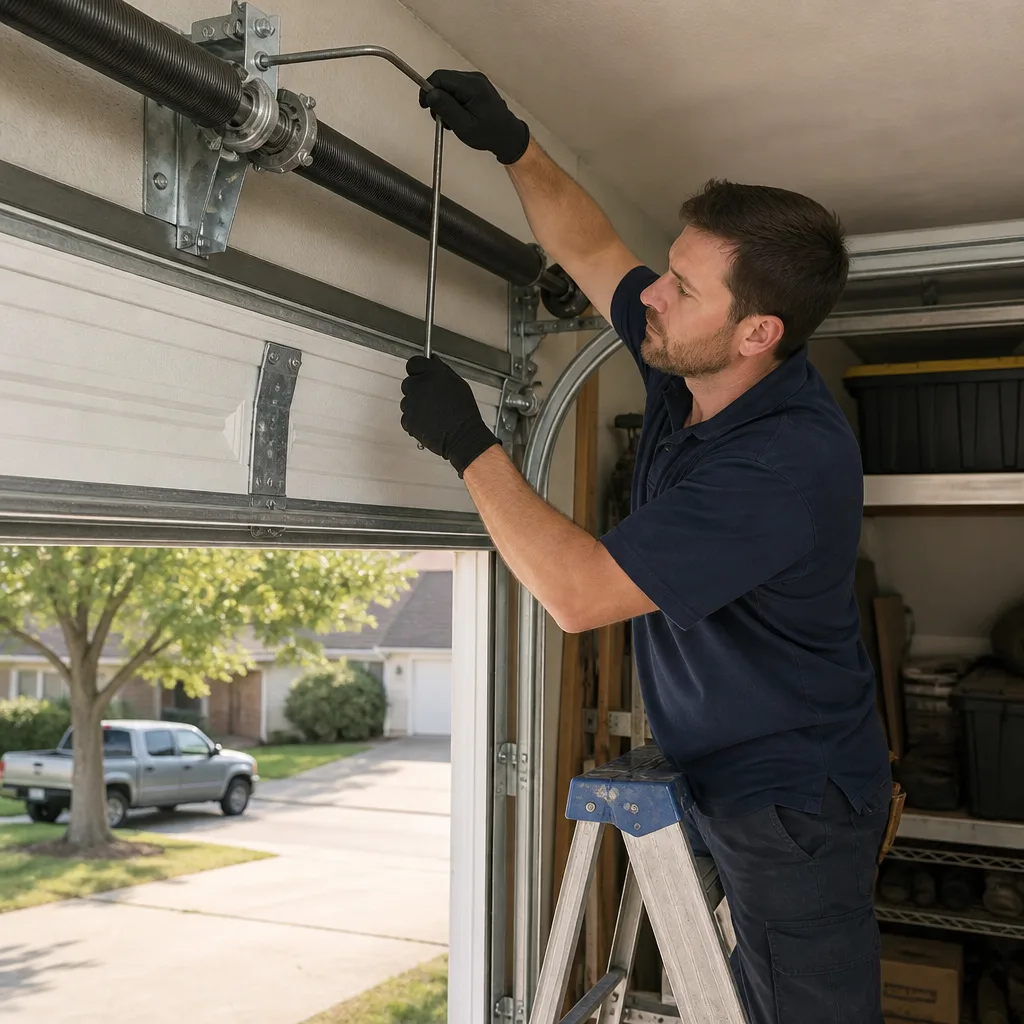 After
After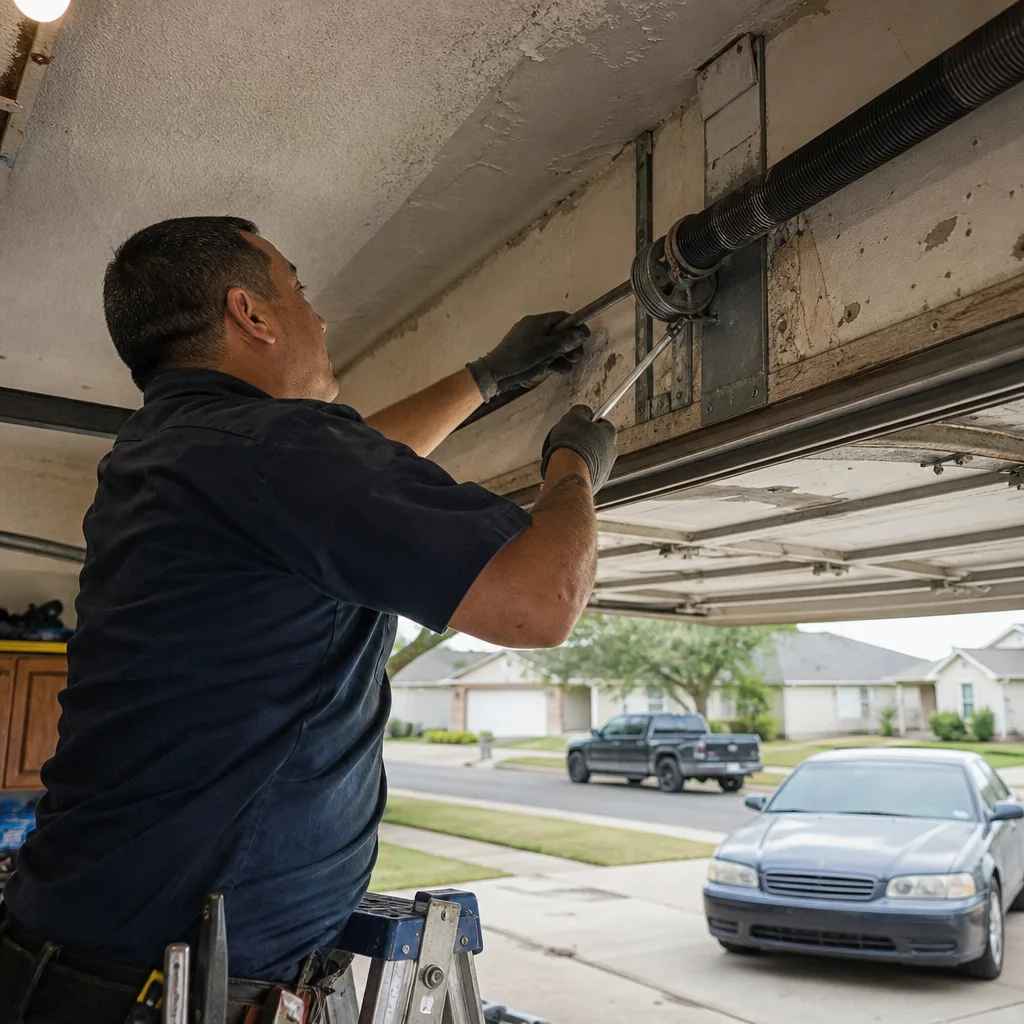 Before
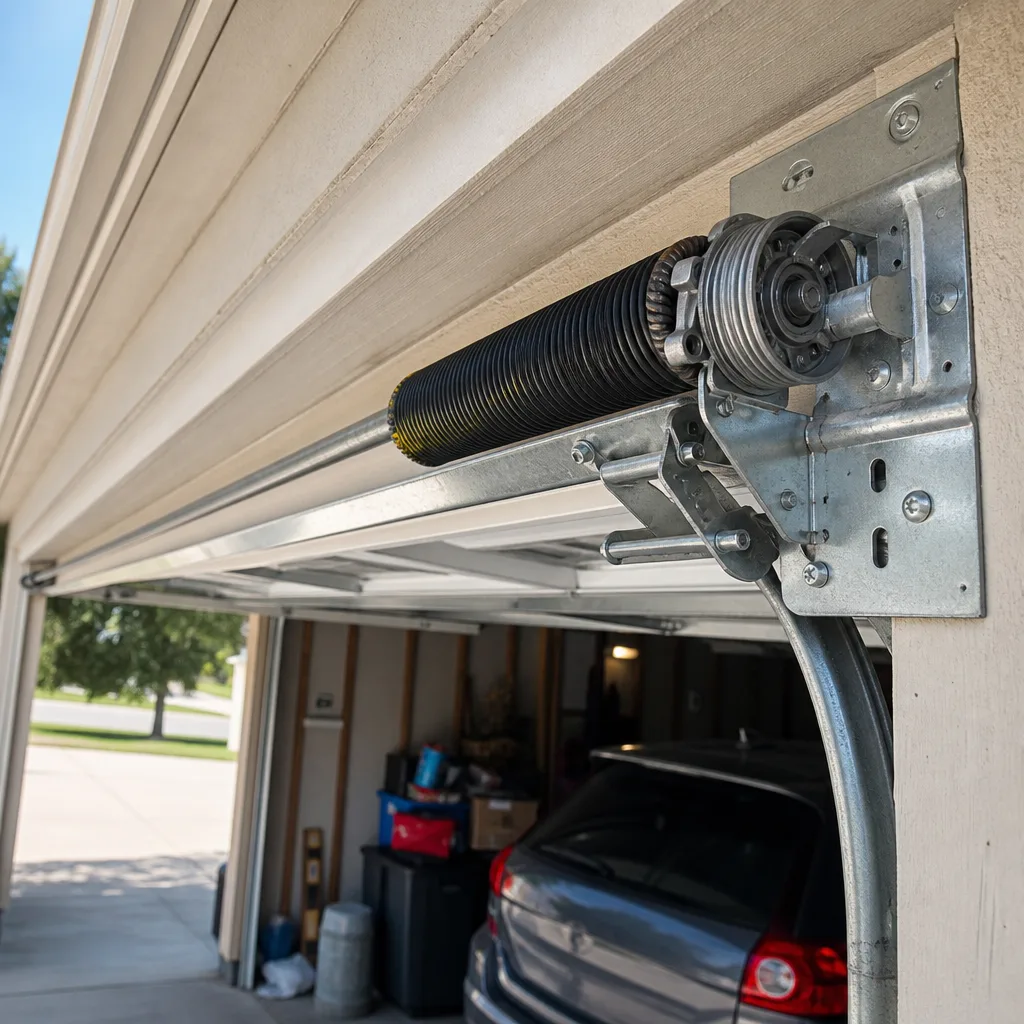 After
After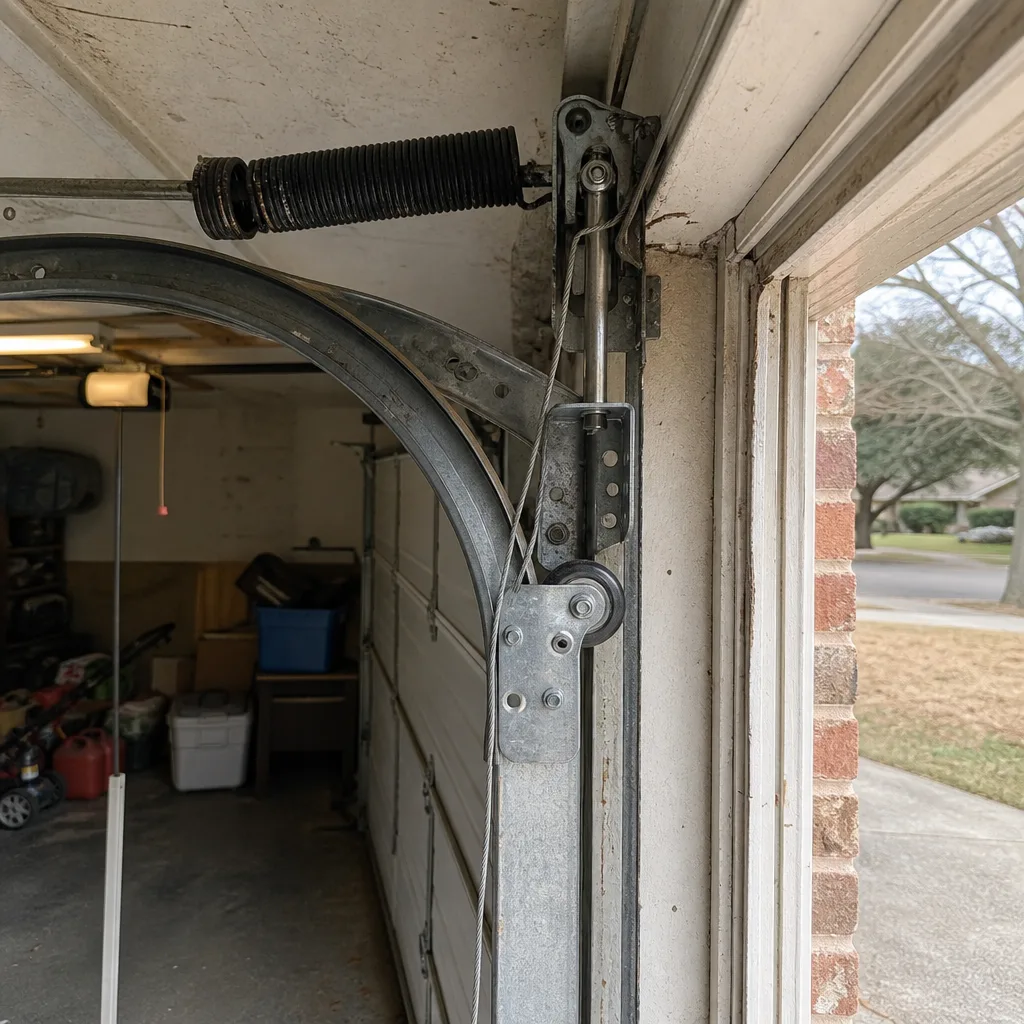 Before
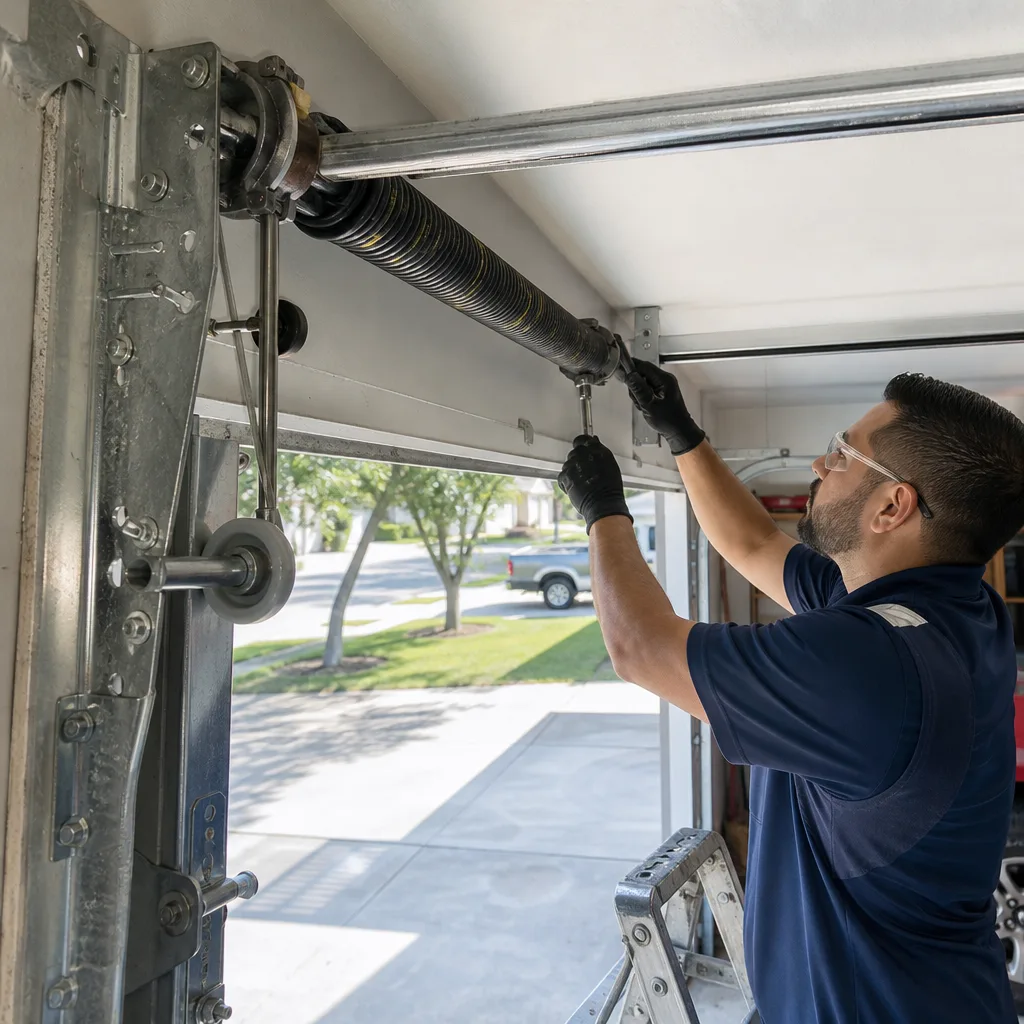 After
AfterSeasonal Garage Door Care for Garland: Year-Round Homeowner’s Guide
Garland recorded 47 days above 100°F in 2023. That’s not a stat most homeowners connect to their garage door, but they should. At those surface temperatures, a garage door panel can reach 140°F by mid-afternoon, and the grease inside an unsealed roller bearing thins to the consistency of cooking oil. It migrates away from the contact surface, leaving metal running dry. The failure doesn’t announce itself in July. It shows up in January, when a cold snap shrinks everything a few thousandths of an inch and the door suddenly binds two feet from the ground. Garland doesn’t have four seasons. It has two thermal extremes and two transition windows, and the maintenance that matters clusters around those transitions. This guide covers what to do, when to do it, and what to record so the door is evidence you own your home rather than evidence you’ve been ignoring it.
Quick Answer
Seasonal garage door care in Garland means two focused maintenance sessions per year: one in April before sustained 100°F heat arrives, and one in October before the first freeze. Each session covers lubrication, spring and cable inspection, weatherstripping, and opener force testing. The goal is to catch thermal fatigue and heat-related wear before they become a breakdown, and the whole routine takes under 90 minutes.
Table of Contents
- Why Garland’s Climate Breaks Garage Doors Differently
- Thermal Cycling: The Failure Mode Nobody Mentions
- Pre-Summer Prep (April): The Heat Readiness Checklist
- Mid-Summer Pause (July-August): What Not to Touch
- Storm-Season Check (May and September): Seals, Cables, and Wind-Driven Rain
- Winter Preparation (October): Why a Door That Works at 85°F Binds at 28°F
- The Garland Maintenance Log: What to Record and Why It Has Dollar Value
- Common Mistakes to Avoid
- When to Call a Professional
- Frequently Asked Questions
- The Bottom Line
This guide is written from the perspective of a garage door company that has worked on doors across Garland since 2015. Servo Garage Doors Garland home page covers our services; this guide is the maintenance framework we recommend to homeowners who’d rather prevent a repair than schedule one. If you’re already past prevention and dealing with a door that won’t open, our Garage Door Repair in Garland page explains what we check, in what order, and what typical repairs cost.
BeforeAfterWhy Garland’s Climate Breaks Garage Doors Differently
Most maintenance guides assume a cold climate: inspect before snow, lubricate before ice, watch for salt corrosion. Garland doesn’t have any of those problems. What it has is heat, sustained and relentless, plus a daily temperature swing that works metal like a hinge being flexed until it cracks.
In Garland, the average July high sits near 96°F, and the low falls to about 76°F. That’s already a 20-degree daily cycle. But during a heat wave, we routinely see highs over 100°F and overnight lows in the low 80s. A dark-painted garage door on a west-facing wall absorbs solar radiation and can reach surface temperatures 40 to 50 degrees above ambient. The steel expands. At night it contracts. Every component, from the panel seams to the torsion spring to the track brackets, moves slightly. Over a single day the movement is microscopic. Over five summers it’s a manufacturing defect waiting to reveal itself.
We’ve replaced panels in Firewheel and Springpark where the horizontal stile separated from the panel face, not because of impact, but because years of thermal expansion and contraction worked the adhesive and fasteners loose. The homeowner saw a cosmetic crack. What had actually happened was metal fatigue at the joint. By the time the crack is visible, the repair is a panel replacement rather than a re-tightening.
The other Garland-specific factor is storm season. The metroplex sits in a band where spring and fall storms can deliver 60 mph straight-line winds and brief downpours that overwhelm drainage. A garage door is the largest single wind-load surface on the house. Wind-driven rain finds the bottom seal first, then the side weatherstripping, then any gap at the top. None of these fail suddenly. They degrade slowly, and the degradation is visible if you know what to look for.
Thermal Cycling: The Failure Mode Nobody Mentions
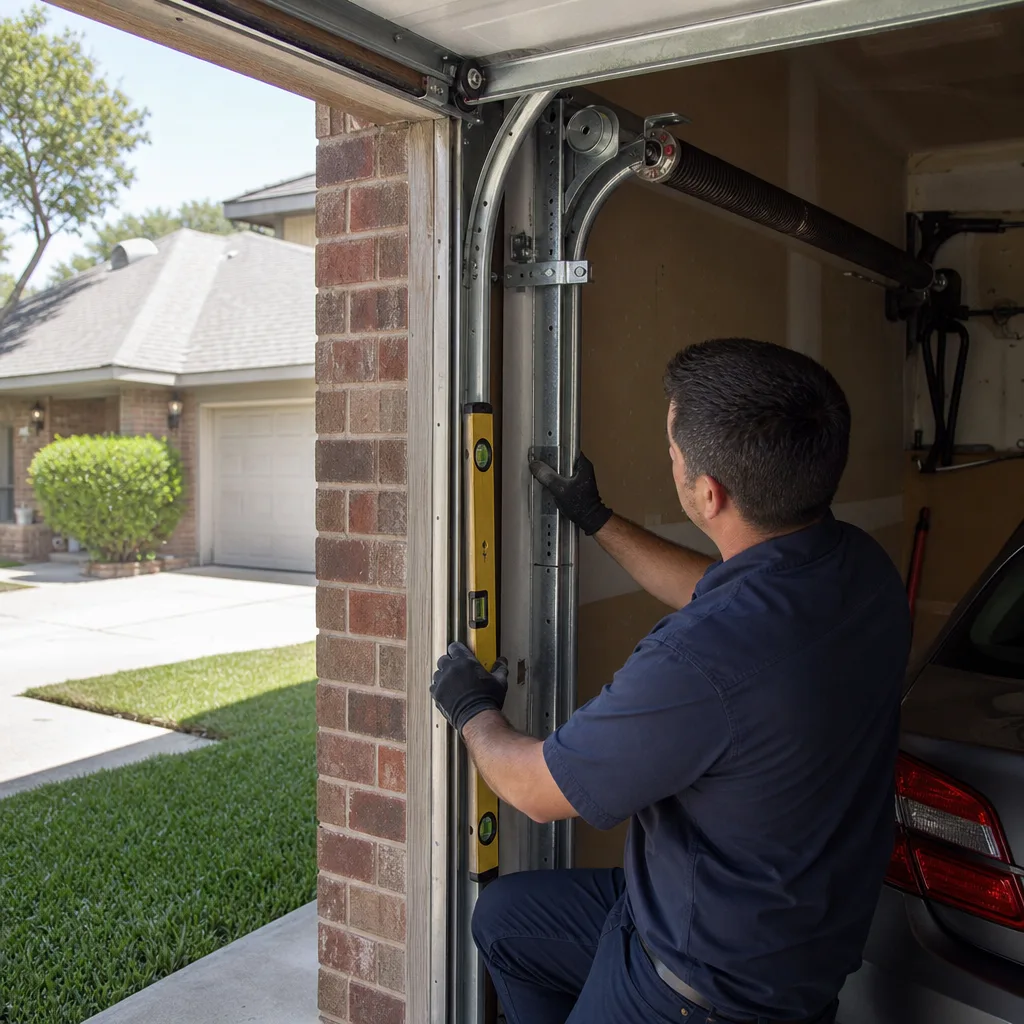
A torsion spring stores mechanical energy by twisting steel wire under tension. The spring’s rated cycle life, often 10,000 cycles for a standard spring and 20,000 for a high-cycle option, assumes the spring operates within a normal temperature range. In Garland, the spring spends about five months of the year cycling while the garage interior is above 100°F. Heat accelerates the microscopic movement of the spring’s molecular structure, which is a polite way of saying the spring gets tired faster.
What does that look like? A torsion spring that fails in Garland rarely snaps mid-lift. More often, it loses tension gradually. The door gets heavier to lift manually. The opener motor strains audibly. A careful homeowner notices the door doesn’t hold at the halfway point when disconnected from the opener. A less careful homeowner gets a call from the opener’s force sensor tripping in the middle of the night.
Panel joints also suffer. Most modern residential doors are constructed from stamped steel panels joined at horizontal seams with a tongue-and-groove profile. The panels are designed to flex slightly, but repeated expansion across a 40-degree daily range works the seam. The symptom is a door that develops a slight bow when viewed from inside the garage. It can be subtle, a quarter-inch deflection across the width. Left unaddressed, the bow increases, the door binds at the top corners of the opening, and the panel eventually cracks at the stile joint.
How to Check for Thermal Fatigue in 5 Minutes
- Open the door fully and stand inside the garage. Look across the interior face of the panels. A thermally fatigued panel shows a bow or wave you don’t see when the door is closed.
- Run a flat hand across each horizontal seam. The seam should feel flush within a sixteenth of an inch. If you feel a lip, the panels are no longer aligned.
- Close the door slowly and watch the top corners. They should clear the track brackets equally. If one side drags, the door has shifted out of square, likely from frame movement or panel deformation.
- Disconnect the opener and lift the door manually by hand. It should move smoothly with consistent effort. A door that feels heavier in the top third of travel has a spring problem.
- Note the date and the finding. This goes in the maintenance log, covered below.
If you’re facing a spring problem and don’t want to guess at the diagnosis, Garage Door Repair in Garland explains how we measure spring wire diameter, count coils, and replace springs based on the door’s actual weight rather than a chart. Torsion springs under tension are dangerous to work on without the correct winding bars and technique. We do not recommend any DIY spring work.
Pre-Summer Prep (April): The Heat Readiness Checklist
In Garland, April is the month to do this. Not March, when the weather is still unpredictable, and not May, when the first heat wave has already arrived and you’re working on a door that’s been cooking all day. April gives you a garage interior that’s warm but not punishing, which matters because the adhesive on replacement weatherstripping cures better between 60°F and 80°F.
Step-by-Step April Maintenance Routine
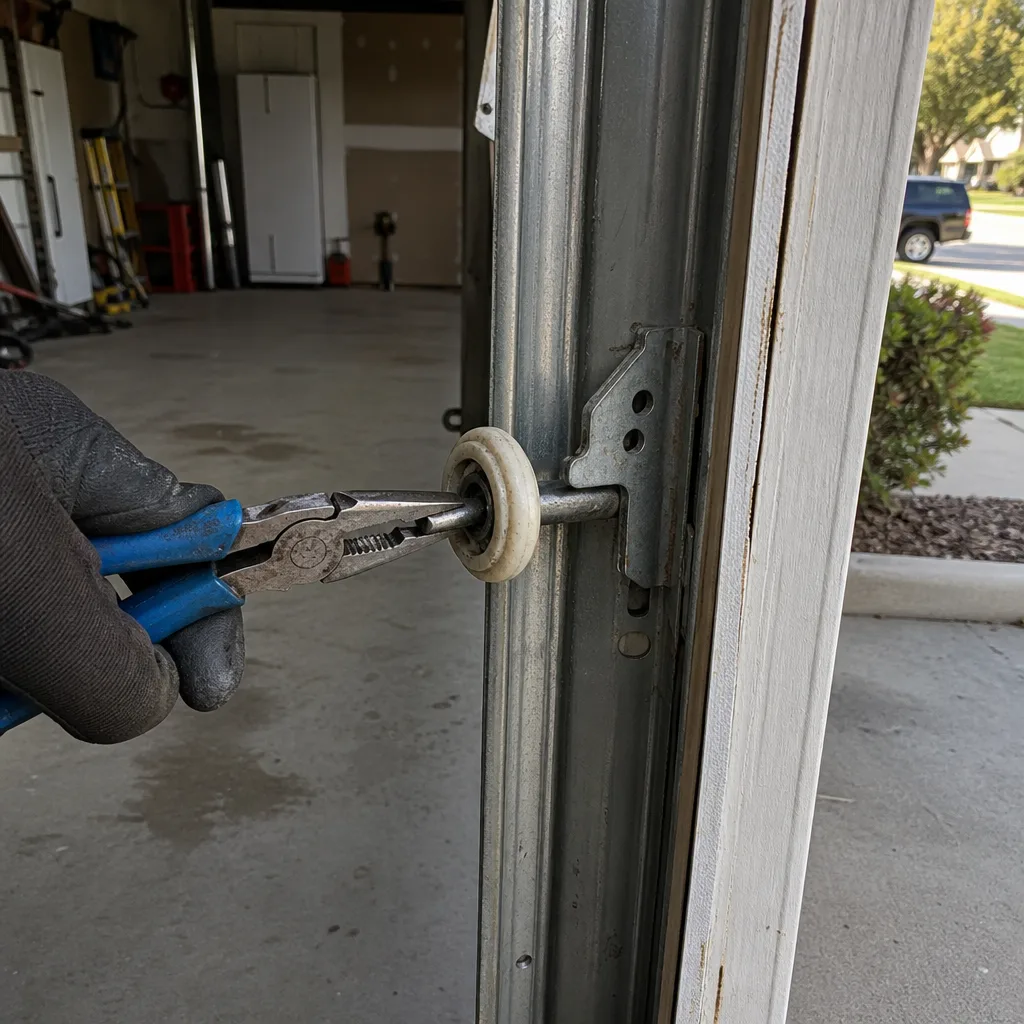
- Lubricate all moving contact points. Use a white lithium grease on the torsion spring coils and a silicone-based spray on the rollers, hinges, and track. Do not use WD-40. It’s a solvent, not a lubricant, and it strips the existing grease. For Garland specifically, use a grease rated for high temperature. Standard lithium grease thins at 110°F; high-temp formulations stay stable to 300°F. The rollers on most doors are unsealed, which means the bearing is exposed. In Garland’s heat, an unsealed roller bearing without adequate grease fails fast. LiftMaster and Chamberlain openers don’t care about this, but your rollers do.
- Inspect the torsion spring with the door open. Look for gaps between coils, rust at the winding cone, and any sign the spring has stretched. Measure the gap between coils. A healthy spring has uniform coil spacing. If the coils have separated unevenly, the spring has taken a set and is losing tension. Note the spring’s wire diameter if you know it. A typical residential door in Garland uses a 0.207-inch or 0.225-inch wire spring. If yours measures thinner and the door is heavy to lift, the spring was under-specified at installation.
- Test the auto-reverse safety feature. This is not seasonal in the sense that it’s only relevant in spring, but the heat of summer is exactly when a failing opener motor is most likely to overheat and behave unpredictably, so we recommend testing it in April. Place a 2×4 on the floor where the door closes. The door should reverse within two seconds of contact. If it doesn’t, stop using the opener and call a technician. This is a safety-critical component.
- Check the weatherstripping at the bottom, sides, and top. Garland summer storms can dump an inch of rain in 30 minutes. A bottom seal with a split or a memory dent from a previous impact will let water run straight under the door. Run a garden hose along the bottom edge and look for daylight under the seal from inside. We call this the water test. It’s the single fastest way to identify a seal that needs replacement.
- Inspect cable tension on both sides. With the door open, the lift cables should be taut and evenly seated in the cable drums. A frayed cable or one that has jumped the drum groove is a failure waiting. Do not attempt to re-seat a cable on a torsion spring door. The spring holds enough force to break bone. Call a technician.
If you want a professional to do this once so you have a baseline, that’s what our technicians do as part of a standard tune-up. We photograph what we find, including the inside of the spring assembly and the roller condition, so you have a record of the door’s state before summer. If a roller bearing is failing, we can tell you before it becomes a door-off-track call at 2 p.m. on a 103°F Saturday.
Mid-Summer Pause (July-August): What Not to Touch
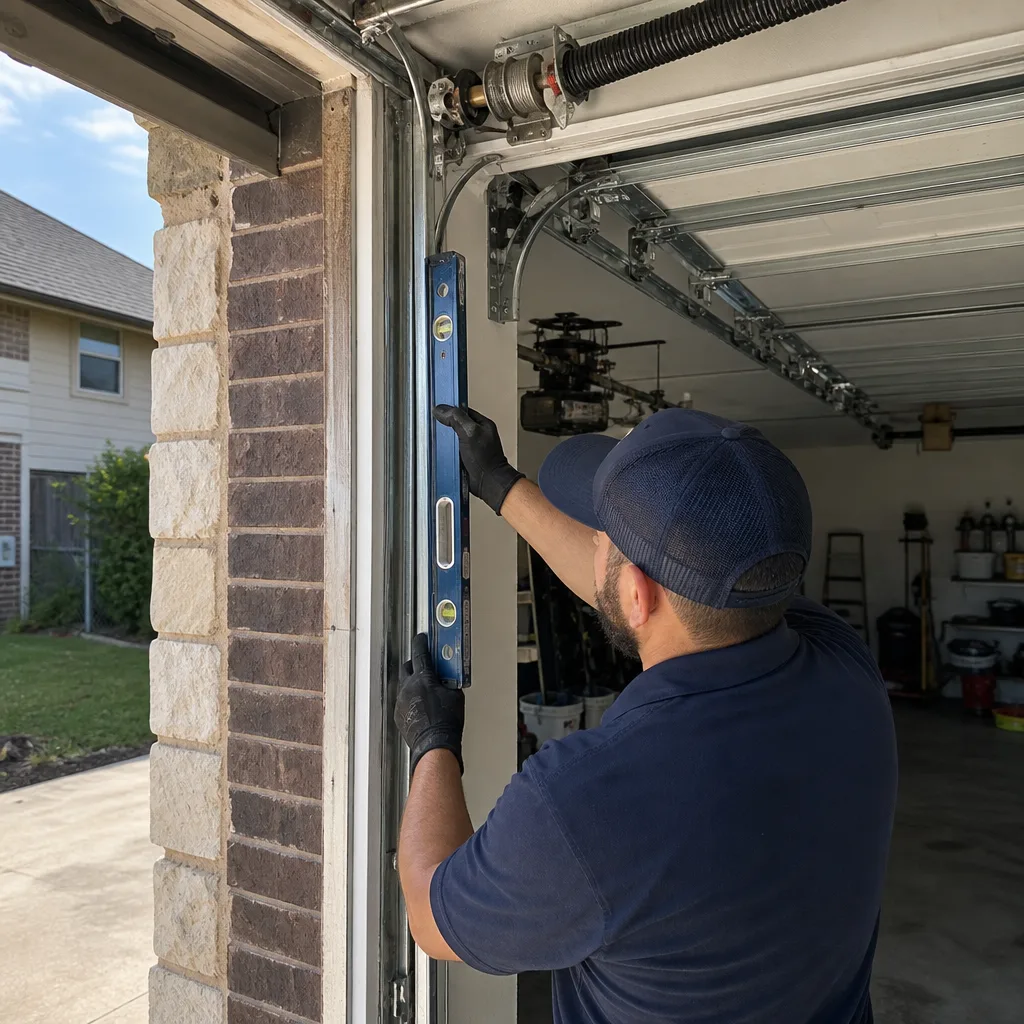
Here’s the counterintuitive advice: in the hottest weeks of a Garland summer, the best maintenance is restraint. The door is thermally soaked. Every component is at maximum expansion. Lubricating a 140°F garage door is wasted effort because the grease hasn’t cooled enough to adhere properly. Adjusting track alignment while the metal is heat-expanded can leave you with a door that’s out of alignment when October arrives and everything contracts.
What to do instead is observe. The summer months are when a door shows you its stress points. Listen for new sounds: a squeal that wasn’t there in May, a grinding noise when the trolley carriage moves along the rail, a thunk when the door passes a certain point. Each noise maps to a component. Squeal is a dry roller bearing or hinge. Grind is the opener rail or a misaligned track. Thunk is a panel joint or a bracket that has loosened.
If you hear something new, note the date and the sound. When you do the October maintenance session, you’ll have a symptom list to work through. If the sound is new and getting worse, don’t wait. A roller bearing that seizes in July is more likely to pull the door off track than a roller bearing that seizes in December. The heat has already weakened the surrounding material.
One specific Garland issue we see every August: garage door opener motors overheating in unconditioned garages. The motor’s thermal overload protection shuts it down mid-cycle. The door opens halfway, stops, and the opener won’t respond for 10 to 15 minutes. Homeowners assume the opener failed. In many cases, it’s the thermal cutoff doing its job. If you have a Chamberlain opener and this happens, check the ventilation around the motor housing. If the unit is mounted in direct line with a west-facing wall, that wall is radiating heat into the motor. Adding a garage exhaust fan usually solves it. If the opener continues to trip after cooling, the motor’s windings may be damaged, and that’s a replacement decision. See our Garage Door Opener Repair & Installation in Garland page for what we check before recommending replacement.
Storm-Season Check (May and September): Seals, Cables, and Wind-Driven Rain
Garland sits in a region where the storm threat is real but often underestimated because it’s not the coast. A severe thunderstorm can produce 60 mph straight-line winds, and wind-driven rain at that speed doesn’t fall, it travels horizontally. It finds every gap.
The Weatherstripping Gap Test
This test takes two minutes and predicts whether your garage will flood during a storm. Do it in May and again in September.
- Close the garage door and turn off the garage lights.
- Stand inside and look at the perimeter of the door. Any gap where daylight shows through is a gap where wind-driven rain can enter. With the lights off, daylight is easier to see.
- Pay special attention to the bottom corners. This is where the bottom seal meets the side weatherstripping. If the bottom seal is worn or compressed, the corners are where it fails first.
- Check the top edge. A top seal that has flattened or pulled away from the header allows wind to pressurize the garage and drive water up under the door.
If daylight appears anywhere, replace the weatherstripping. It’s a $20 to $60 part depending on the door width and profile type. The labor is straightforward, and for a Genie or Clopay door the replacement seal slides into a T-channel retainer on the bottom panel. The important thing is getting the right profile. A seal for a Clopay door won’t fit a Wayne Dalton door, and forcing it causes the seal to bunch at the corners, which is worse than leaving the old one in place.
Cable Tension and Storm Wind Load
High winds load the door panels unevenly. A properly tensioned door transfers that load through the hinges to the track and into the wall framing. A door with slack cables transfers it to the cables themselves, and a gust can cause the cable to jump the drum. The result is a door that suddenly drops on one side. That’s not a repair you do at 11 p.m. during a thunderstorm warning.
With the door closed, check that both cables are taut, neither has visible fraying, and both are seated in the drum grooves. If a cable looks loose while the door is closed, the spring tension is off, and the door likely isn’t sitting level in the opening. That’s a spring adjustment, not a cable adjustment, and it’s worth getting ahead of before storm season peaks.
Winter Preparation (October): Why a Door That Works at 85°F Binds at 28°F
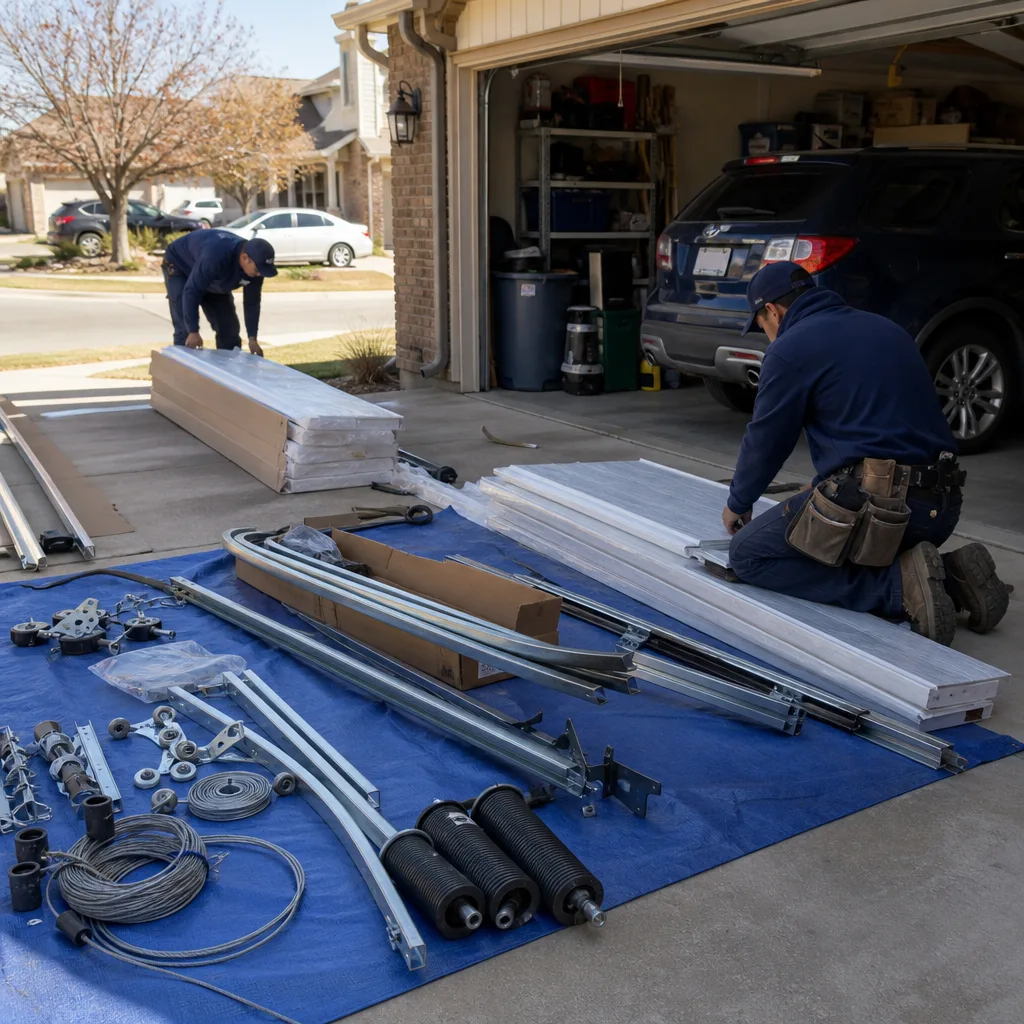
Every January, we get calls from Garland homeowners whose doors suddenly won’t close all the way. The door works fine in the fall, then the first hard freeze hits, and the door stops two inches from the concrete. When we arrive, the usual cause is not a broken spring or a failed opener. It’s thermal contraction.
Here’s the physics. The garage door track is steel. The brackets that hold the track to the wall are steel. The lag bolts that attach the brackets to the wall are steel. Steel expands and contracts at a predictable rate: roughly 0.0000065 inches per inch per degree Fahrenheit. A 7-foot garage door track doesn’t change length much over 50 degrees of temperature swing. But the garage floor, the door panel, and the concrete perimeter shift slightly, and the cumulative movement is enough to throw the track alignment out.
When the door binds at 28°F but works at 85°F, the most common culprit is the vertical track being slightly too tight against the door at the bottom section. The fix is a small track adjustment: loosen the bottom track bracket, shim the track outward by an eighth of an inch, and retighten. It’s a 20-minute job. It’s not a DIY job for someone who isn’t comfortable working with the door under spring tension, but it’s also not a replacement, and an honest technician will quote it as an adjustment, not a rebuild.
October Maintenance Checklist Before the First Freeze
- Re-torque all track brackets and hinge bolts. The expansion of summer has worked every fastener slightly looser. A socket wrench on every bolt takes 15 minutes and prevents the creaking and shifting that become binding in the cold.
- Test the opener’s force settings. In cold weather, the door is slightly heavier because the grease is thicker and the seal is stiffer. If the opener’s force limit is set too tight, it will reverse mid-cycle. Most LiftMaster and Chamberlain openers have a force adjustment dial or digital setting. Increase it by one increment, then test the auto-reverse with the 2×4 method. The door should close fully but still reverse on contact.
- Apply a cold-weather lubricant to hinges and rollers. Using the same silicone spray as April is fine. The point is to re-coat the contact points before the seasonal change. Cold doesn’t fail bearings; dry cold fails bearings.
- Check the bottom seal for stiffness. A rubber bottom seal that has hardened over summer will not compress properly at 28°F. The door closes but the seal stays rigid, leaving a gap along the concrete. Replace it if it feels stiff or shows surface cracking.
- Disconnect the opener and run the door manually through its full travel. Note any point where you feel increased effort. That’s the point where the door will bind when it’s 25 degrees colder.
If you have a Genie opener and notice it reversing unexpectedly during a freeze, the issue is often the force sensor reading the additional drag from the cold seal as an obstruction. The solution is the same: a slight force adjustment plus a pliable seal. Garage Door Opener Repair & Installation in Garland covers more opener troubleshooting, including what’s adjustable and what isn’t.
The Garland Maintenance Log: What to Record and Why It Has Dollar Value
Here’s the part of the guide that pays for itself twice. First, in avoided breakdowns. Second, at resale.
A maintenance log is a simple dated record of what you inspected, what you adjusted, what you replaced, and what you observed. It doesn’t need to be elaborate. A spiral notebook in the garage cabinet works. A note in your phone works. What matters is consistency and specificity.
What to Record Each Session
- Date and ambient temperature. This matters because a door that binds at 28°F and a door that binds at 95°F have different causes.
- What you lubricated and with what product. Grease type matters in Garland. If you used high-temp lithium, note it.
- Spring appearance. Coil gap, rust presence, any change since last inspection.
- Manual lift effort. Rate it 1 to 5, with 1 being effortless and 5 being a struggle. A door that goes from 2 to 4 over two years is heading for a spring replacement.
- Any new noises. Describe the sound and where in the travel it occurs.
- Seal condition. Note cracks, stiffness, daylight gaps.
- Any repairs performed and by whom. If you called a professional, keep the invoice. It’s documentation, not clutter.
The resale value is real. When a buyer in Garland looks at a house with a 2018 garage door, they have no idea what they’re inheriting. A log that shows four years of consistent inspection, with a spring replaced in 2022 by a licensed company, tells the buyer the door has been maintained. It answers the question before the home inspector asks it. We’ve had customers tell us the maintenance log was the deciding factor in a negotiation over a door replacement credit.
If you’re here because you need a door replaced rather than maintained, Garage Door Installation in Garland explains our process, which includes a written price and scope before any work starts. The new door arrives with a fresh maintenance schedule, and we recommend starting the log the day the installation is complete.
Common Mistakes to Avoid
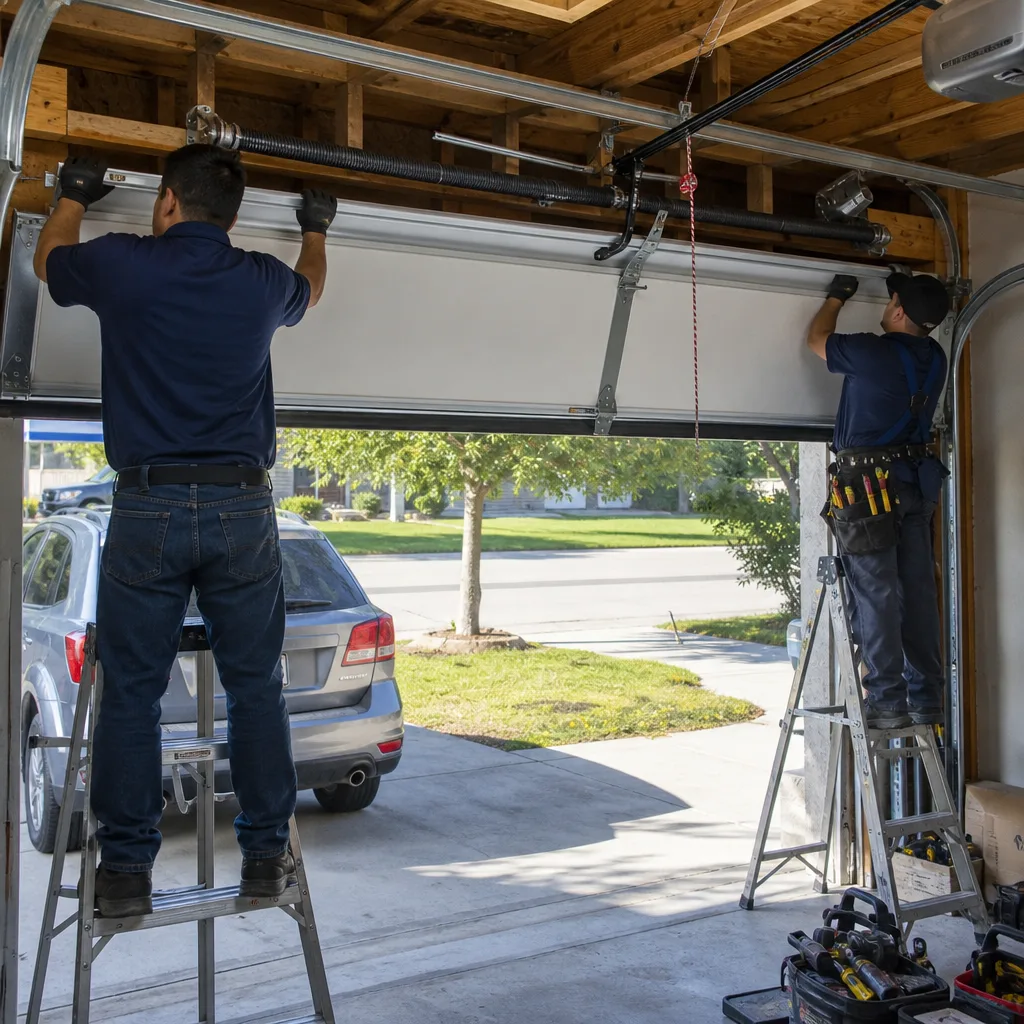
- Using WD-40 as a garage door lubricant. WD-40 is a water displacement solvent, not a lubricant. It strips the existing grease and leaves the bearing dry. In Garland’s heat, a dry bearing lasts one summer. Use white lithium grease on springs and silicone on rollers and hinges.
- Assuming a noisy door is just an old door. Every noise maps to a component, and the earlier that component is identified, the cheaper the fix. A squealing roller bearing replaced for $8 prevents a door-off-track repair that costs $200 and a day without a functioning garage.
- Adjusting the spring without the proper tools. Torsion springs hold enough tension to break a wrist or a jaw. The winding cone requires a specific bar length and a specific procedure. We have never once recommended a homeowner adjust their own torsion spring, and we’re not starting now.
- Ignoring the auto-reverse test. The auto-reverse feature is what stands between a closing door and a child or pet. Federal safety standards require it. A door that fails the 2×4 test is a door that can injure. This is not optional maintenance.
- Replacing a seal without matching the profile. Every manufacturer uses a different T-channel profile. A seal that doesn’t match the retainer will bunch, leak, and come loose. Take a photo of the old seal’s cross-section before buying a replacement, or let a technician match it against a sample board.
- Waiting until the door fails to call someone. A door that’s been binding for a month has already done additional wear to the hinges, rollers, and opener motor by the time it stops completely. The cost of a tune-up is always less than the cost of a breakdown repair.
- Thinking Garland winters are mild enough to skip preparation. The 2021 freeze event caught the whole metroplex off guard. Doors that had worked fine for years suddenly wouldn’t open because the grease had thickened and the seals had stiffened. A 30-minute October session would have prevented most of those calls.
When to Call a Professional
Some things are maintenance. Some things are repair. Here’s the line. Call a professional when the torsion spring shows visible wear, when a cable is frayed or off the drum, when the door has come off track, when the opener’s logic board is misbehaving, or when any repair would put you in the path of stored spring energy. The spring is the component we respect most in this industry. It can be replaced safely by someone with the right tools and training, and it can seriously injure someone without them.
We also recommend a professional when you want a baseline. If you’ve just moved into a Garland home and the door’s history is unknown, a tune-up that includes a photo record of every component gives you a starting point. Servo Garage Doors Garland offers free estimates in Garland. Call (469) 949-6806 and we’ll schedule a technician to inspect the door, document what we find, and give you a written price before any work starts.
Frequently Asked Questions
Twice per year, in April and October, is the correct interval for Garland’s climate. The heat demands a fresher coating before summer, and the cold demands a re-coating before the first freeze. If your garage door is exposed to full western sun, you may want to add a third lubrication in July, but only if you hear squealing. The April session should carry the door through summer under normal conditions.
Use a white lithium grease rated for high temperature on the torsion spring, and a silicone-based spray lubricant on the rollers, hinges, and track. Standard lithium grease thins at roughly 110°F, and a Garland garage in August can exceed that easily. High-temperature formulations are stable to 300°F and are available at any hardware store. Do not use WD-40; it’s a solvent and will strip the protective film rather than lubricate.
The most common reason a door binds at 28°F but works at 85°F is thermal contraction of the steel track and the surrounding structure. The bottom track sections pull slightly inward against the door panel, and the added friction of cold-thickened grease and a stiffened bottom seal is enough to stop the door. The fix is usually a small track adjustment plus a force-setting tweak on the opener. It’s a 20-minute job for a technician.
Yes, in both May and September. Storm season in Garland brings high wind and rain, and the pieces that fail are the cable tension, the bottom seal, and the side weatherstripping. The daylight gap test, described in the storm-season section above, takes two minutes and identifies which weatherstripping needs replacement before the next storm arrives.
A standard tune-up in Garland typically runs $89 to $149 depending on the company and whether it includes parts like rollers or seals. Some companies discount the tune-up if you proceed with a repair found during the inspection. The tune-up is always cheaper than the repair it prevents, and if the technician documents the inspection with photos, you have a record for future maintenance and resale. For a specific quote, call Servo Garage Doors Garland at (469) 949-6806. We provide a written price before any work starts.
Standard torsion springs last 7 to 10 years in Garland under normal use, but the heat shortens that. We’ve seen springs fail at the 5-year mark in doors that face west and get daily afternoon sun. High-cycle springs with a 20,000-cycle rating last longer, but they cost more upfront. If your spring is over 7 years old, have it inspected in April so a break doesn’t leave the door inoperable mid-summer. Some of the more common setups are servo openers. Call for an inspection quote: (469) 949-6806.
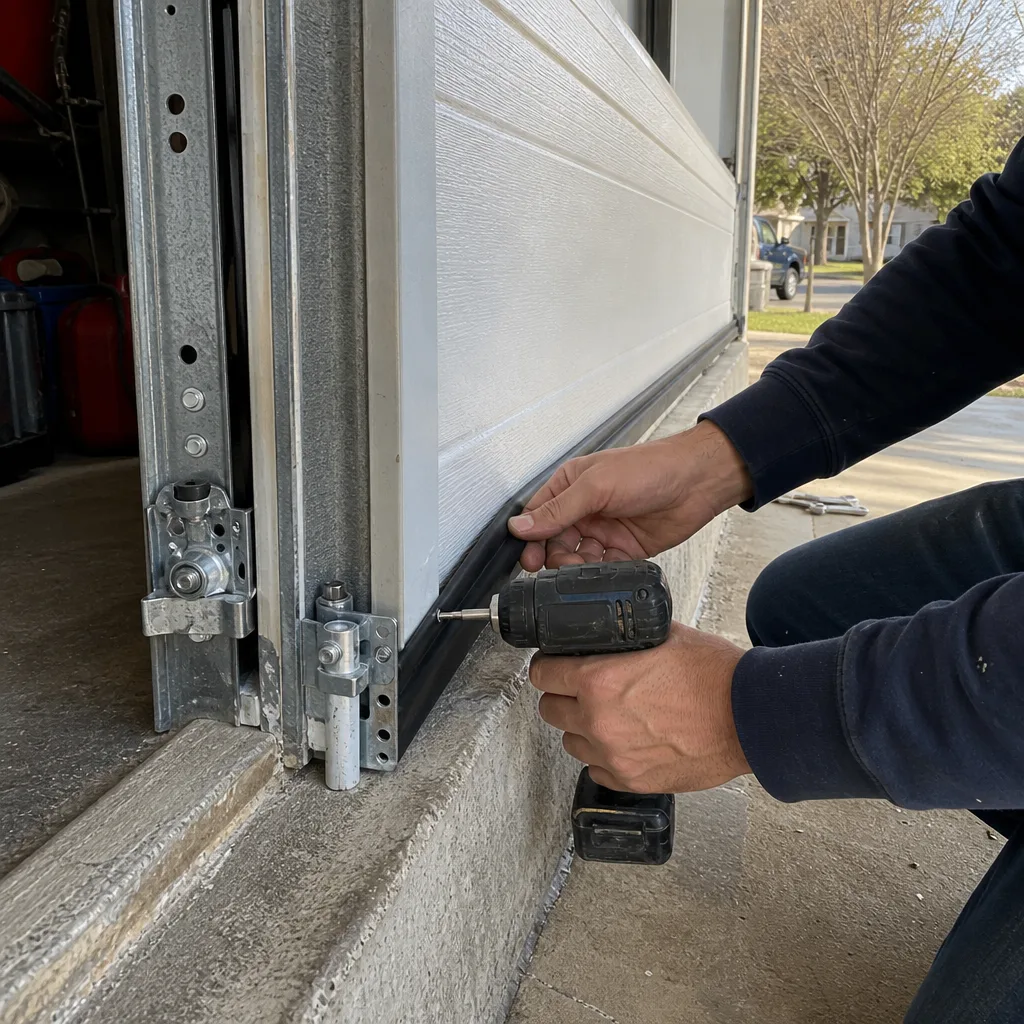
Yes, if the existing retainer is intact and you match the replacement seal to the profile. The removal is usually sliding the old seal out of the T-channel and sliding the new one in. The common failure is buying the wrong profile, which is why we recommend photographing the cross-section of the old seal before shopping. If the retainer itself is bent or damaged, the job becomes a repair, and that’s when you call a technician.
The Bottom Line
Garland garage doors fail on a calendar that doesn’t match the rest of the country. The schedule here is April for heat readiness, May and September for storm checks, October for freeze preparation, and January through March for observation. The actual maintenance is simple: lubricate, inspect, test, record. What costs money is neglect, and neglect costs most in August and January, when the door has to work and doesn’t.
The record is the part nobody thinks about. A maintenance log turns a garage door from an unknown quantity into a documented asset. Buyers notice. Home inspectors notice. And when the door does need service, a technician who sees a maintenance history knows they’re working on a door the owner has kept honest. That’s the door that lasts 20 years in this climate. Call Servo Garage Doors Garland at (469) 949-6806 for a free estimate on any repair, installation, or tune-up, scheduled at your convenience.
Written by Marcus Deller, Owner at Servo Garage Doors Garland, serving Garland since 2015.