
Last updated September 20, 2026
Full 25-point door and opener safety check with every visit - springs, cables, rollers, tracks, and your LiftMaster or Chamberlain opener included
You get a price before we start. It does not change when the truck arrives.
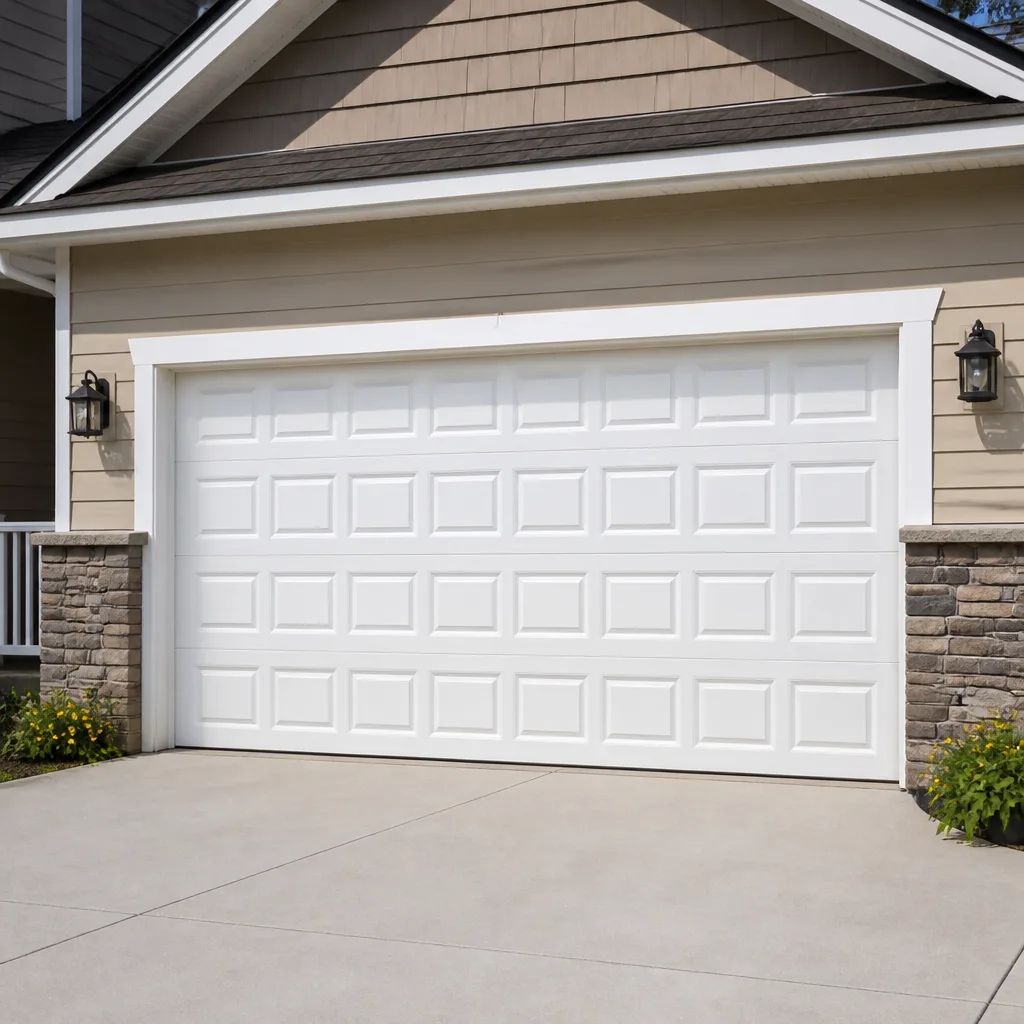
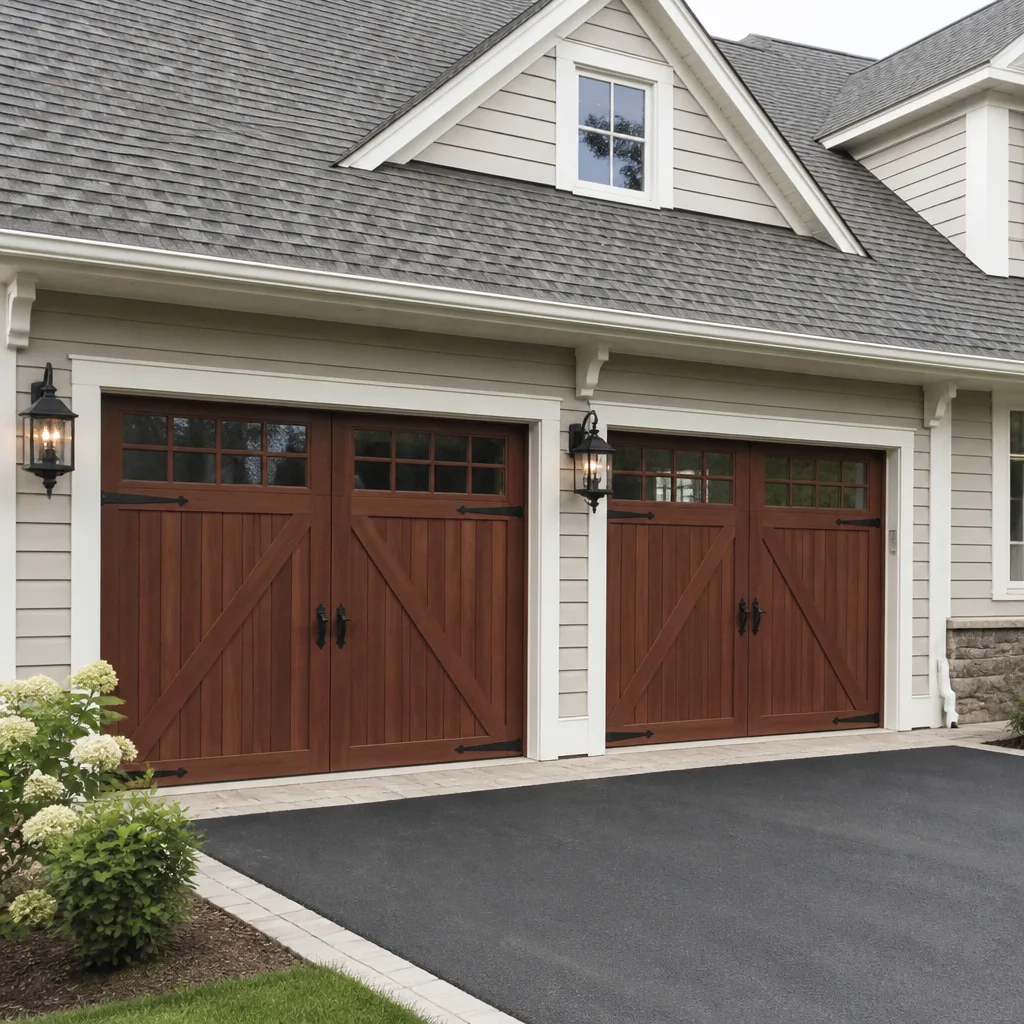
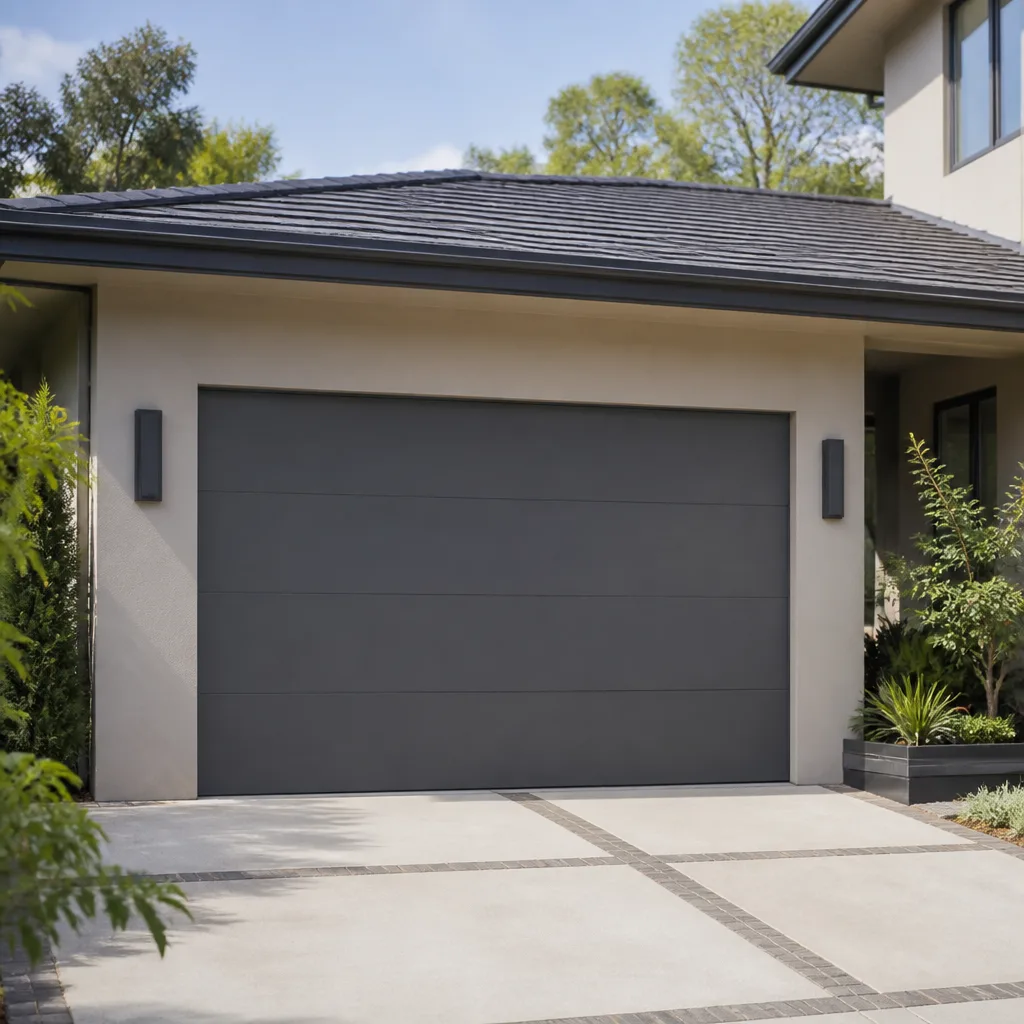
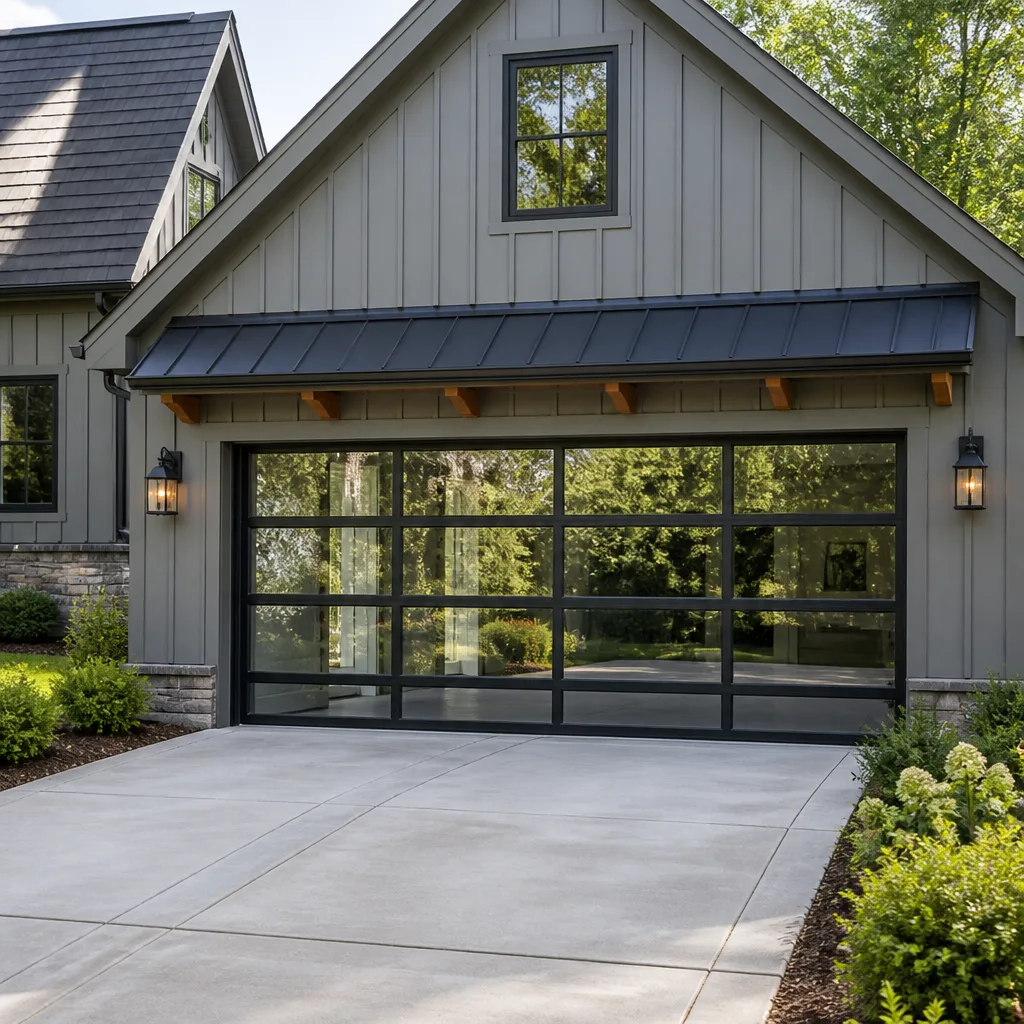
 Before
 After
After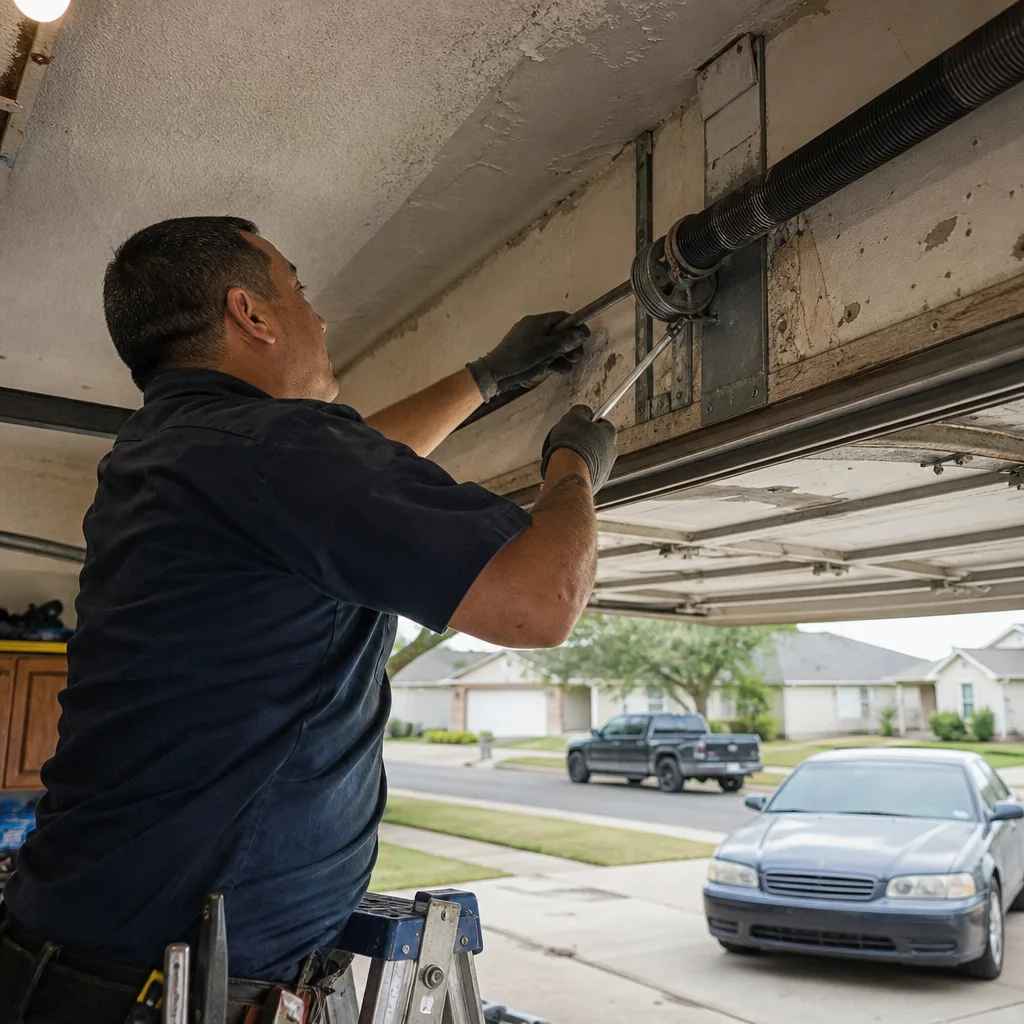 Before
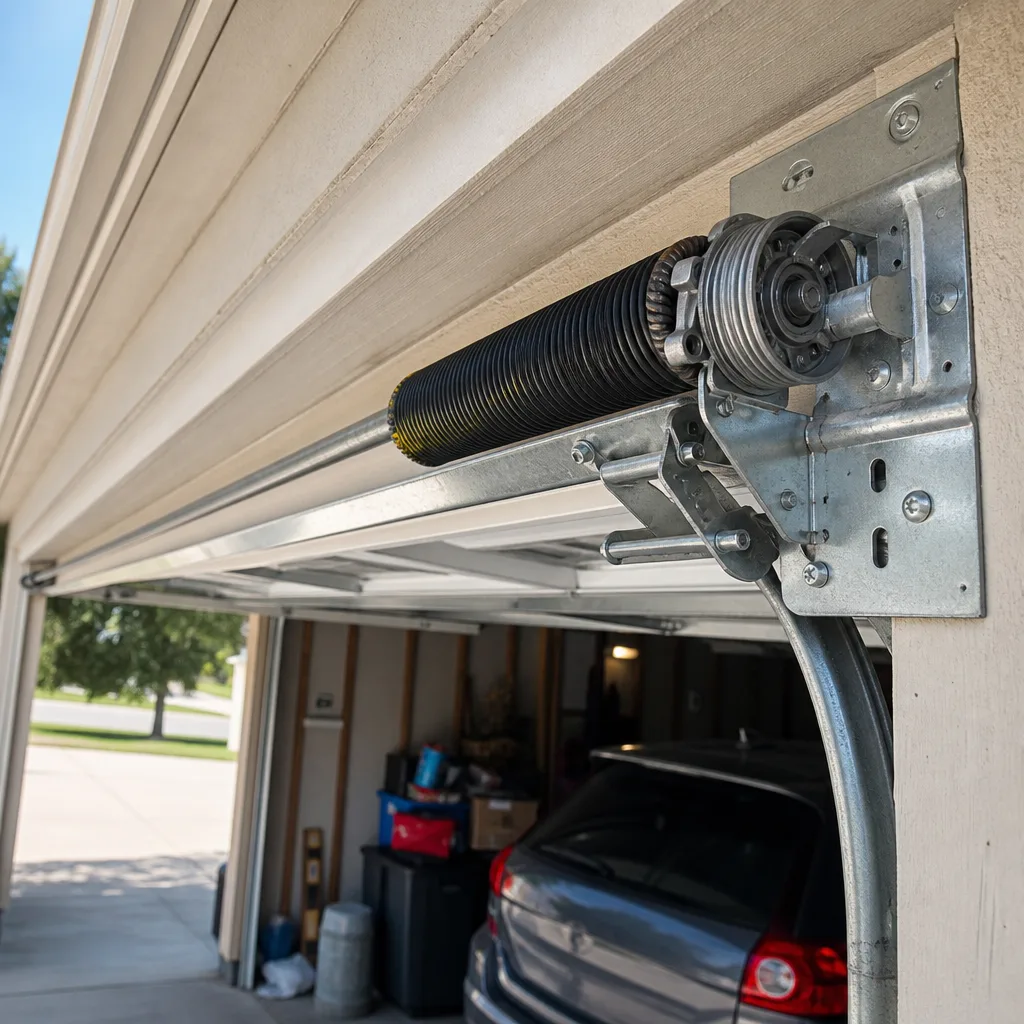 After
After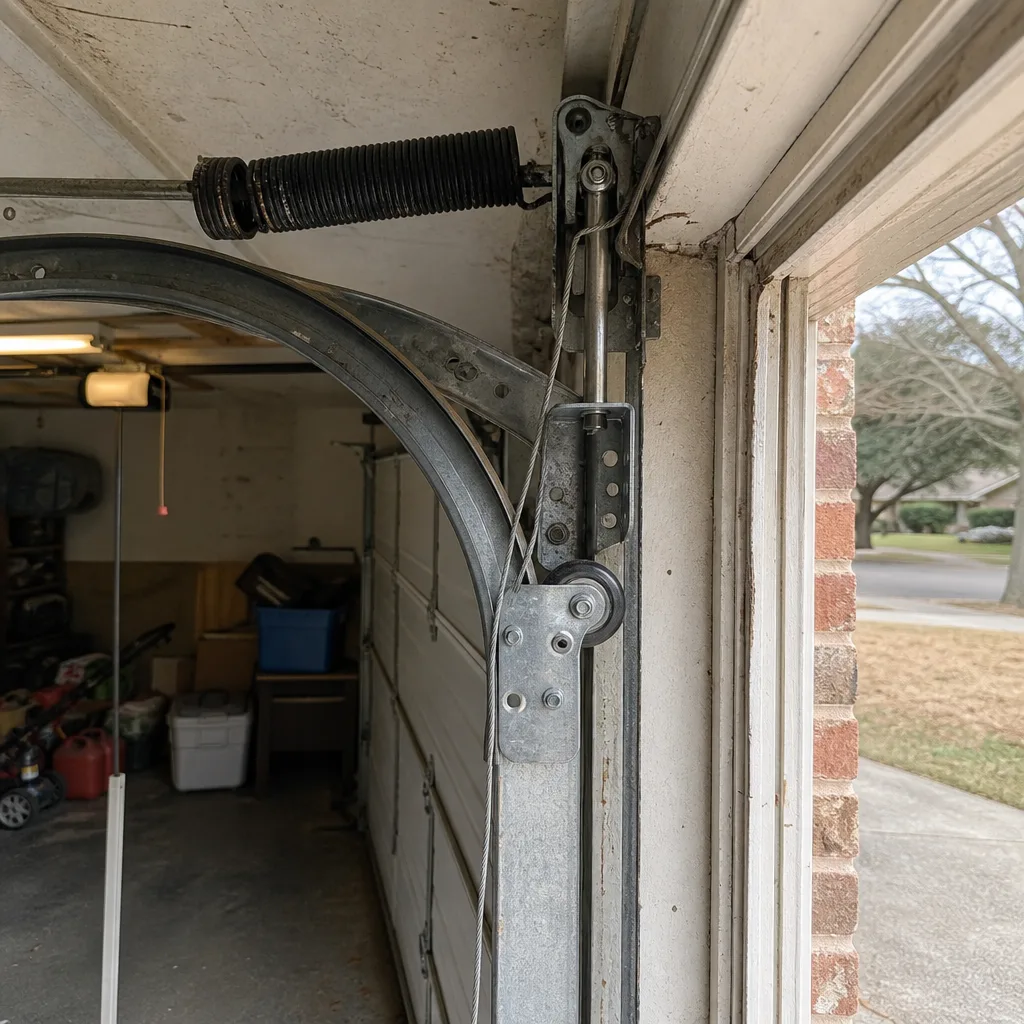 Before
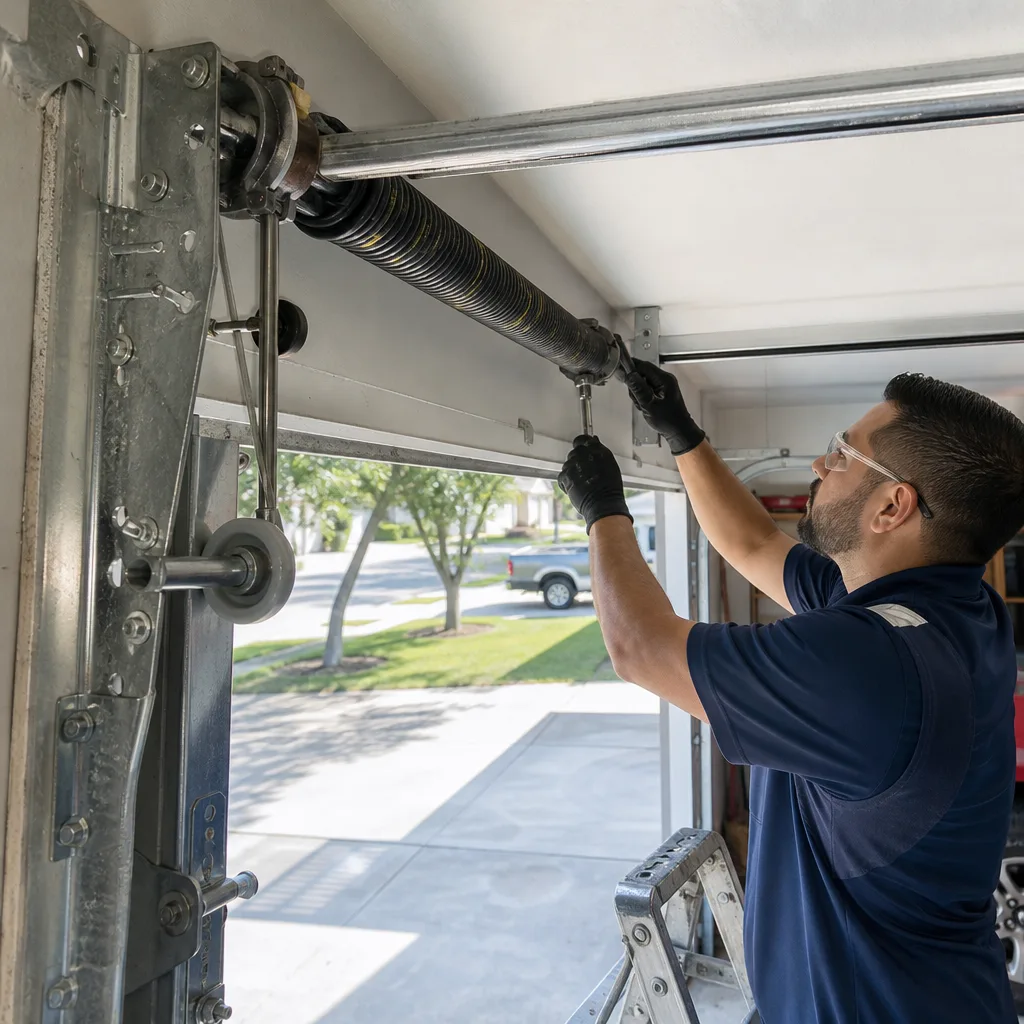 After
AfterThe Complete Guide to Garage Door in Garland
A Garland homeowner’s garage door cycles roughly 1,500 times a year. That is more mechanical stress than nearly any other moving system in the house, and most people spend less time choosing it than choosing a kitchen faucet. This guide names every component, explains what it costs when it fails, and maps Garland’s specific conditions, clay soil movement, summer heat cycling, to the three decisions that actually matter: material, drive type, and spring configuration. For a full cost breakdown for Garland homeowners in 2026, see our dedicated reference. By the end, you’ll know how to read a quote line by line and spot an upsell before it gets written.
Quick Answer
A garage door is a system of counterbalanced panels, springs, tracks, and an opener. In Garland, material choice and spring configuration matter more than brand, because our expansive clay soil shifts foundations and our 100-degree summers shorten the life of plastic and nylon components. Expect to pay $150 to $450 for common repairs, $600 to $1,400 for a new opener installed, and $1,200 to $4,500 for a new door installed depending on material and size. Every price should be written before work starts.
Table of Contents
- Every Component, What It Does, and What It Costs to Fix
- Why Garland’s Clay Soil Moves Your Door Out of Square
- Torsion vs. Extension Springs: The Configuration That Actually Matters
- Drive Types Compared: Belt, Chain, Screw, and Direct
- R-Value in a Garland Garage: What the Label Doesn’t Tell You
- Door Materials: Steel, Aluminum, Wood, and Composite in North Texas Heat
- How to Read a Garage Door Quote: Fixed Costs vs. Upsell Vectors
- A Garland Maintenance Schedule That Actually Works
BeforeAfterEvery Component, What It Does, and What It Costs to Fix
A garage door is not one machine. It is eleven or twelve separate components that have to work together every single cycle. When one fails, it usually takes something else with it. Here is the full breakdown, with current Garland market pricing for 2026.
The panels are the sections you see from the street. They are steel, aluminum, wood, or composite, and they are connected by hinges. A single dented panel runs $180 to $400 to replace on a standard 16-foot door, assuming the model is still manufactured. If the door is discontinued, the honest answer is often a full replacement, not a patch job.
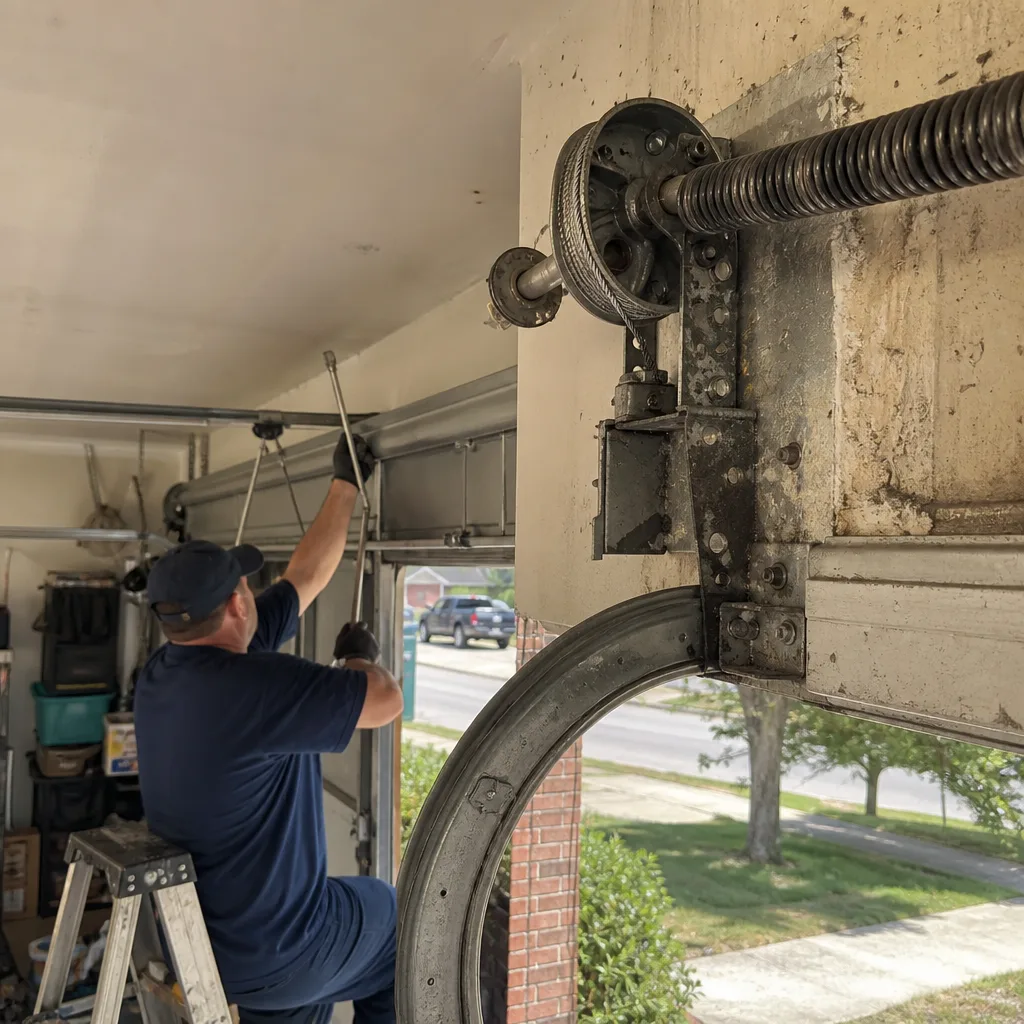
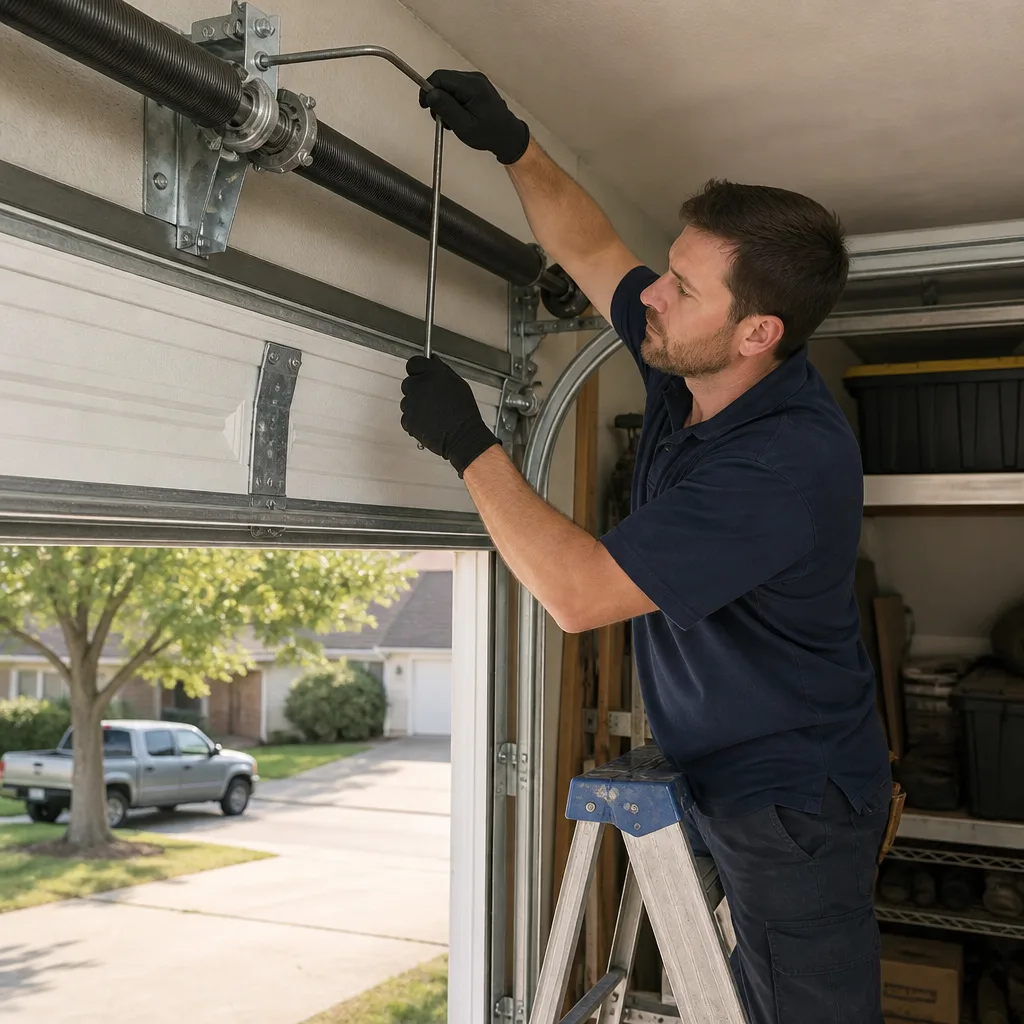
The torsion spring is a coiled steel spring mounted on a shaft above the door. It stores the counterbalance force that makes the door feel light. In Garland’s heat, torsion springs typically last 10,000 to 15,000 cycles, which means 7 to 10 years for most families. A single spring replacement runs $180 to $340. We always recommend replacing both springs on a two-spring door, because the second one is usually within weeks of failing, and the labor is already paid for. Spring work should always be done by a trained technician. A torsion spring holds enough stored force to cause serious injury if it lets go.
The extension springs are the older-style springs that run parallel to the tracks on both sides. They are cheaper to install but fail more violently when they snap, which is why current codes require a safety cable through the center. Replacing a pair runs $150 to $280.
The cables are the braided steel lines that run from the bottom brackets up to the spring shaft. They lift the door. A frayed cable is a warning sign, and a snapped cable means the door slams down on one side. Cable replacement runs $120 to $200 per side.
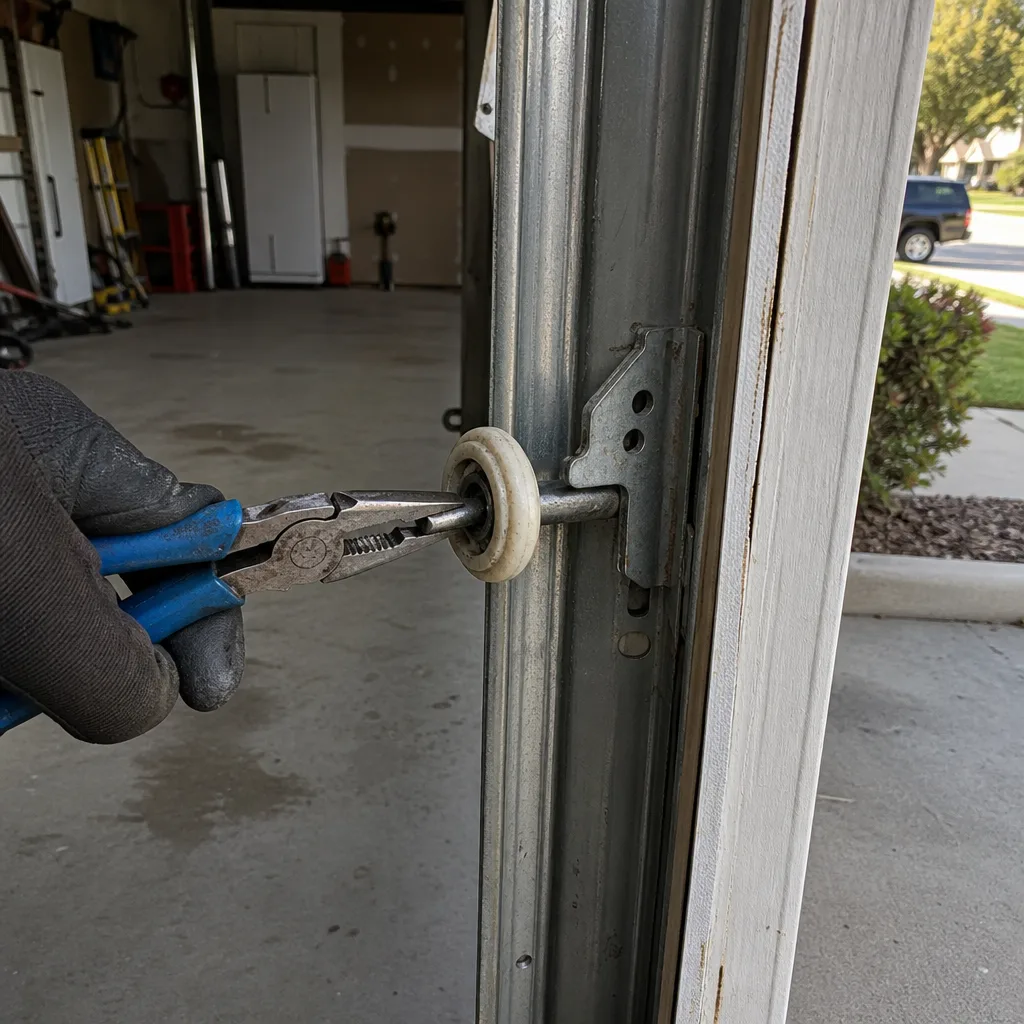
The rollers are the wheels that ride in the tracks. Steel rollers last longer than nylon, but nylon runs quieter. A set of 10 to 12 rollers costs $90 to $180 installed. In Garland, we see plastic rollers from the original build start to disintegrate between years 8 and 12.
The tracks are the steel channels that guide the door up and over. Bent tracks are usually caused by impact or by foundation movement. Track replacement runs $120 to $250 per side, and misalignment correction is often part of a service call at $75 to $125.
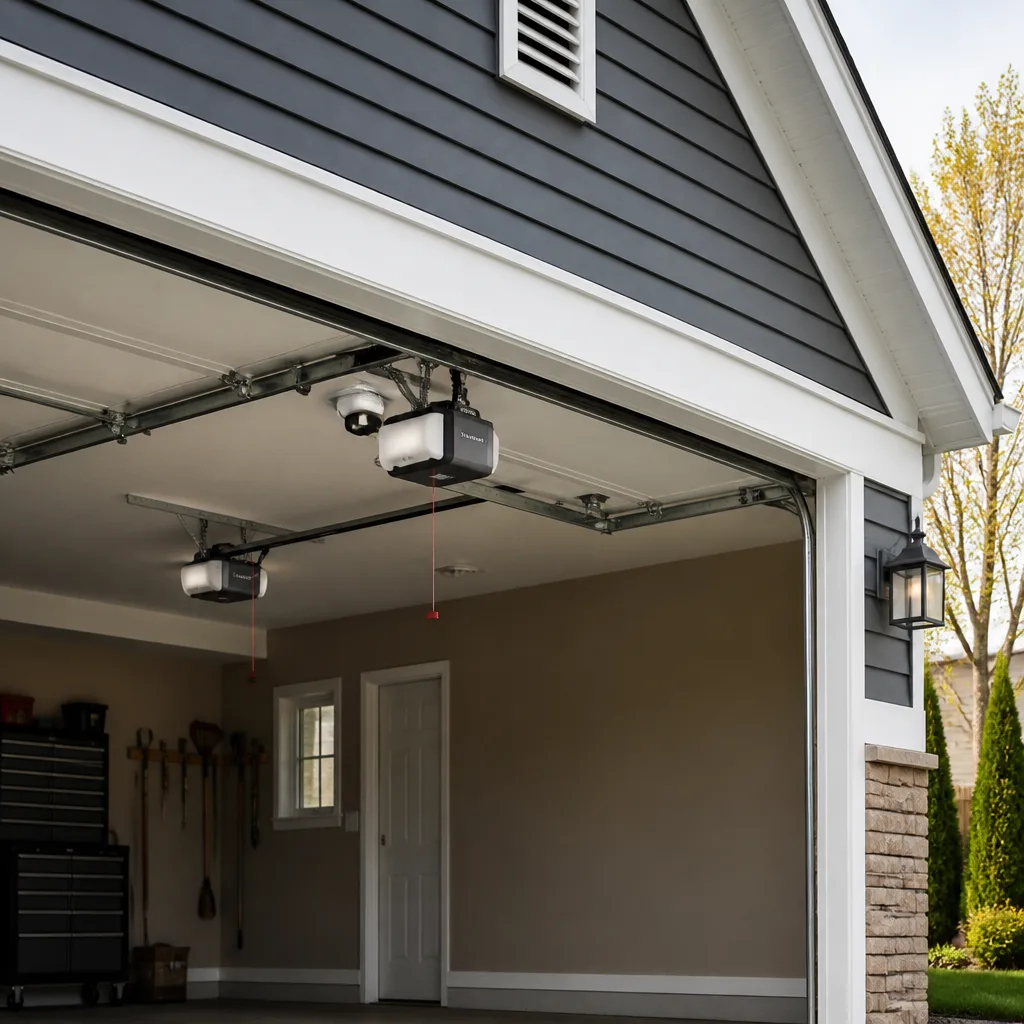
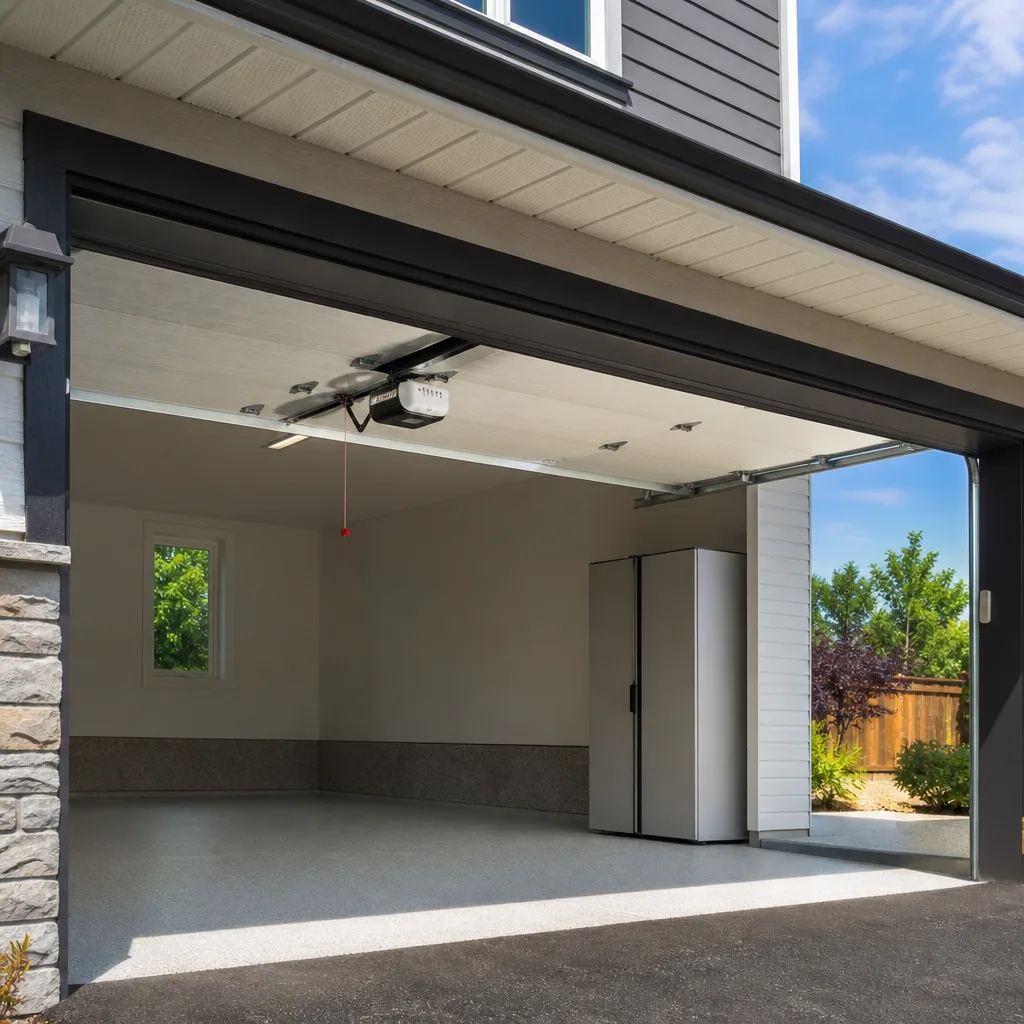
The opener is the motor unit on the ceiling, connected to the door by a drive rail. Opener repair in Garland runs $125 to $300 depending on the part. Logic boards, the circuit board that controls the opener, cost $130 to $220. The limit switch, which tells the door where to stop, runs $70 to $130.
The brackets and hinges connect the panels and hold the door to the tracks. These are the cheapest parts on the door, $15 to $60 each, and the most commonly ignored during maintenance. Loose hinges tear out of steel panels, which turns a $25 fix into a $300 panel replacement.
The weatherstripping along the bottom and sides keeps water, dust, and June bugs out. Garland’s dry spells crack rubber seals in about two years. Replacement runs $80 to $150 for a full perimeter.
The sensors sit near the floor on both sides of the door opening. They are the photo eyes that stop the door from closing on a person, a pet, or a bicycle. Misaligned sensors are the most common “my door won’t close” call we get in Garland, and the fix takes about ten minutes. Sensor replacement runs $80 to $130.
The remote and keypad are the access points. A new remote runs $40 to $75 programmed. A wireless keypad runs $50 to $90 installed.
One more component worth naming: the operator arm, the metal arm that connects the opener rail to the door. It works loose over years of cycling. If your door jerks at the very top of travel, that arm is the first thing to check.
Why Garland’s Clay Soil Moves Your Door Out of Square
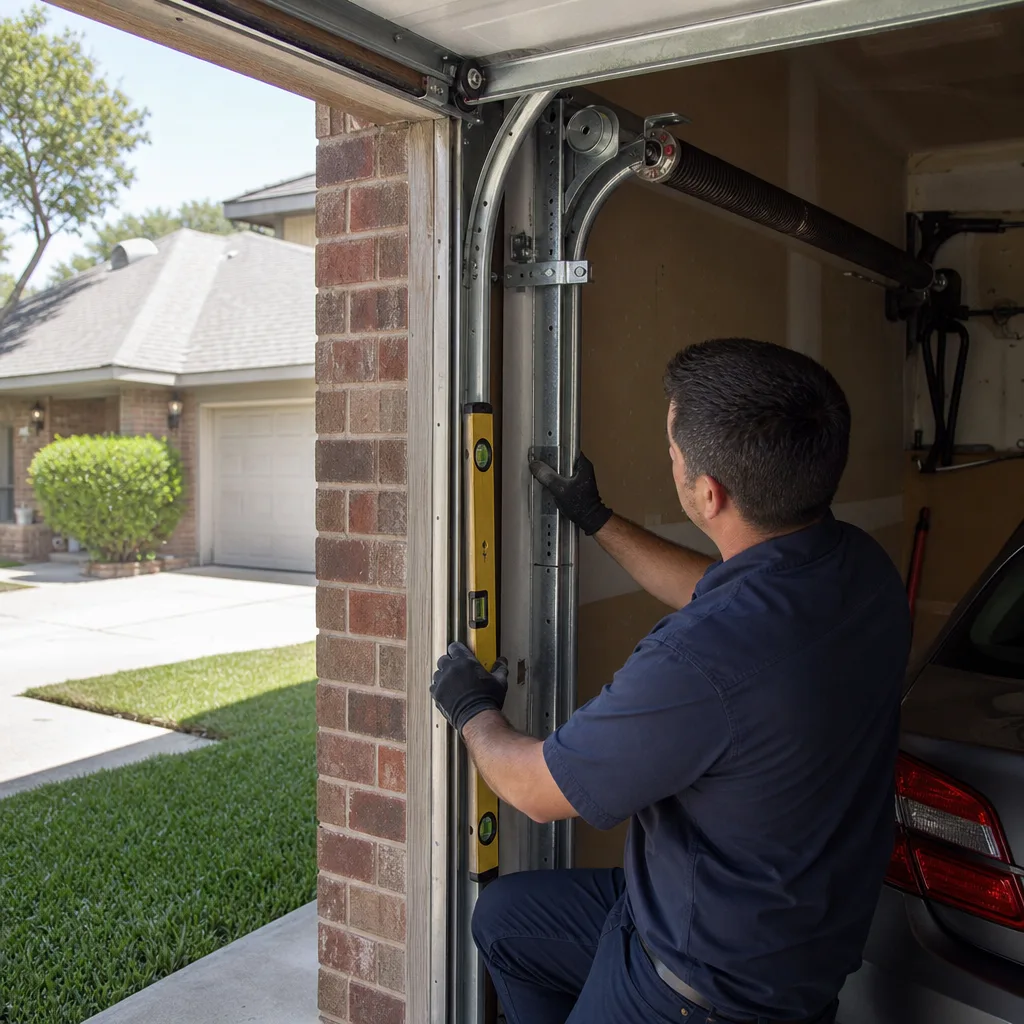
Garland sits on a band of expansive clay soil, the same black gumbo clay that runs through Mesquite and Rowlett. This soil absorbs water during spring rains and swells. Then it shrinks during July and August, when we go weeks without rain and the ground cracks open. Your house moves a fraction of an inch each season. So does your garage slab.
When the slab moves, the garage door opening changes shape. The corners pull out of square by an eighth of an inch, then a quarter inch. The tracks, which are bolted to the framing and the slab, start to bind. The door scrapes. The opener strains. You hear a grinding noise on the way down and assume the opener is failing, when the real problem is that the track is no longer parallel.
We see this pattern most often in older Garland neighborhoods with mature trees and established foundations: Springpark, Camelot, and the subdivisions along Broadway. The houses have been through 20 or 30 wet-dry cycles, and the doors show it.
There are two ways to handle this. The first is regular track adjustment. A technician loosens the track brackets, re-aligns the vertical and horizontal tracks, and re-tightens. This is a $75 to $125 service call and usually fixes the scraping and binding. The second is choosing a door configuration that tolerates movement. A door with higher clearance tolerances and a torsion spring system handles minor misalignment better than an extension-spring door. When you are replacing a door in Garland, this is something to discuss before you commit to a specific model.
If the slab movement is severe, meaning the door binds repeatedly within a single season, the foundation itself may need attention. That is outside the scope of garage door work. But before you call a foundation company, have the tracks measured. We have saved Garland homeowners thousands of dollars by finding a $100 track misalignment that looked like a $10,000 foundation problem.
Torsion vs. Extension Springs: The Configuration That Actually Matters
Spring configuration is the single most important spec on a garage door, and the one that almost no buyer asks about. You should.
Torsion springs are mounted on a shaft directly above the door opening. They wind and unwind as the door moves, and they distribute force evenly across the width of the door. Torsion springs are safer, because a snapping spring stays contained on the shaft. They are smoother, because the force is balanced. And they last longer: 10,000 to 15,000 cycles on a standard spring, up to 25,000 to 30,000 on a high-cycle spring.
Extension springs stretch along the horizontal tracks. They are cheaper, sometimes $50 less per door. They are also slower, noisier, and more dangerous when they fail. A snapping extension spring can send a steel coil flying across the garage, which is why code requires a safety cable through the center of each spring. Extension springs typically last 8,000 to 10,000 cycles.
In Garland, the calculation is straightforward. A family that opens the garage three times a day puts 1,095 cycles a year on the springs. A standard torsion spring lasts about ten years. An extension spring lasts about eight. The price difference per year is negligible. The safety difference is not.
One more distinction matters: high-cycle springs. These are torsion springs rated for 25,000 cycles or more, and they cost $50 to $100 more than standard springs. For a homeowner who plans to stay in the house for 15 years, they are the clearest value on the entire door. The garage door repair in Garland work we do almost always includes the option to upgrade to high-cycle, and we quote both prices so the decision is yours.
Drive Types Compared: Belt, Chain, Screw, and Direct
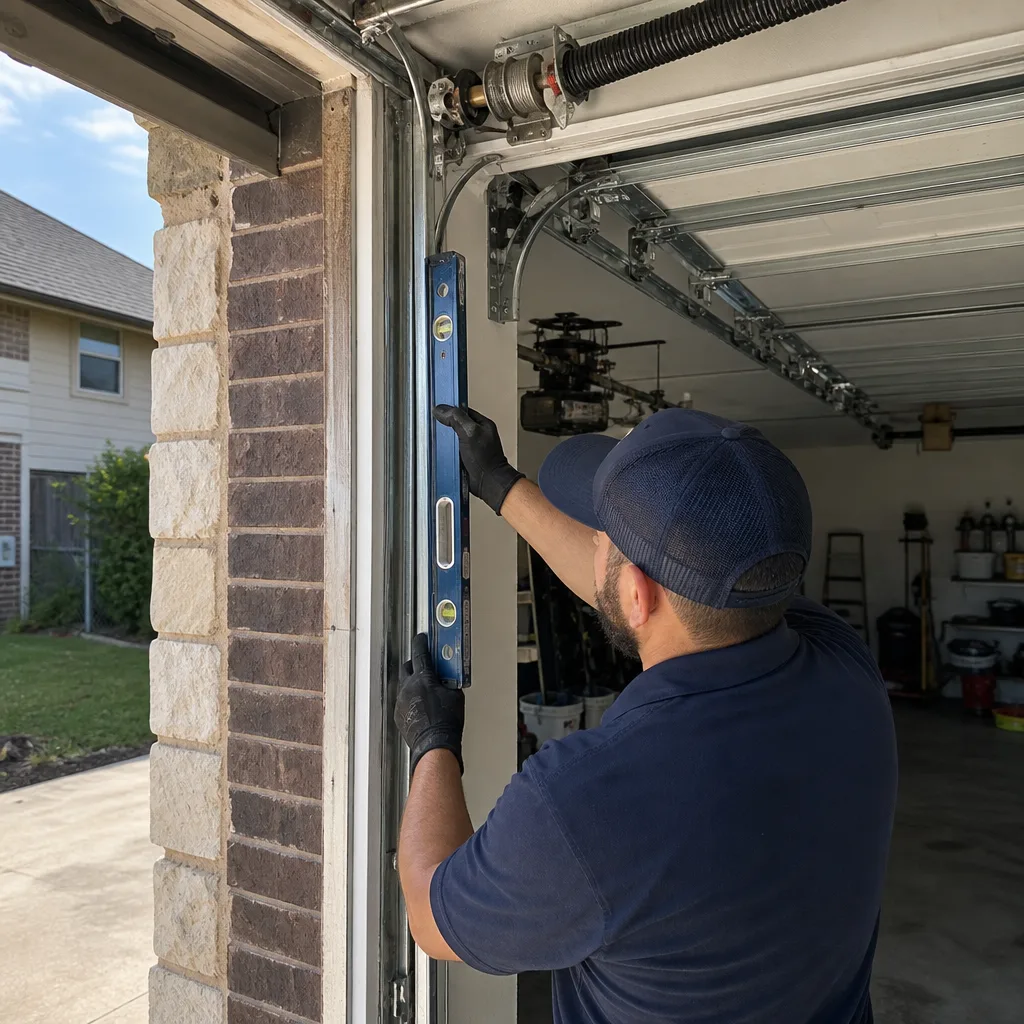
The drive type is how the opener moves the door. There are four main kinds on the market, and the right answer in Garland is not the same as the right answer in Boston or Minneapolis.
| Drive Type | Noise Level | Maintenance | Garland Heat Performance | Parts Cost Range |
|---|---|---|---|---|
| Belt drive | Quietest | Very low | Strong. Rubber belt tolerates heat cycling well. | $180-$320 opener unit |
| Chain drive | Loud | Low, occasional tightening | Good. Metal chain unaffected by heat. | $140-$260 opener unit |
| Screw drive | Moderate | Requires regular lubrication | Mixed. Plastic trolley components degrade in sustained 100°F heat. | $160-$300 opener unit |
| Direct drive | Very quiet | Very low | Strong. Fewer moving parts means less to fail. | $250-$450 opener unit |
Chain drives are the original workhorse. They are loud enough to hear through a bedroom wall, which matters if the garage is under a bedroom, as it is in many Garland two-story homes built in the 1990s and 2000s. The chain itself is nearly indestructible in our climate.
Belt drives use a reinforced rubber belt instead of a chain. They are the most common opener we install in Garland, because they are quiet, they handle heat cycling without stretching, and the belt typically outlasts the motor. If you have a bedroom or home office above the garage, this is the default choice.
Screw drives use a threaded steel rod to move the trolley carriage. They work, but the nylon trolley assemblies on budget screw-drive openers have a habit of cracking after several Garland summers. If you go screw drive, buy a model with a metal trolley, not plastic.
Direct drive is the newest configuration. The motor itself rides on a fixed rail, with almost no external moving parts. Brands like LiftMaster have expanded their direct-drive lines recently, and the units perform well in sustained heat. They cost more up front, but they are the quietest and most reliable option we see.
For garage door opener repair and installation in Garland, the opener itself matters less than the drive type and the quality of the install. A good opener badly installed will fail before a budget opener properly installed.
R-Value in a Garland Garage: What the Label Doesn’t Tell You
Every insulated garage door has an R-value stamped on the box. The label tells you how well the panel insulates under laboratory conditions. It does not tell you how well the door performs once it is installed in a Garland garage that is not finished inside.
Here is the problem. Most Garland garages have bare studs, exposed roof trusses, and no insulation in the walls or ceiling. The garage door accounts for roughly a third of the garage’s wall area. Insulating the door without insulating the rest of the garage is like putting a storm door on a tent. It helps a little, but the heat still pours in through the attic and the uninsulated walls.
What an insulated door does give you, even in an unfinished garage, is three things:
- Noise reduction. An insulated steel door dampens the rattle and boom of cycling. In a house with a garage under the living room, this is the number one reason to insulate.
- Dent resistance. Insulated doors have thicker, more rigid panels. A basketball against a non-insulated 24-gauge panel leaves a dent. Against a 2-inch insulated polyurethane core, it leaves nothing.
- Temperature conditioning, if the rest of the garage gets treated too. If you insulate the garage walls and ceiling, and the door, the garage becomes usable as a workspace for more of the Garland year.
On the door itself, there are two insulation types. Polystyrene is the rigid foam board used in budget insulated doors. It has a lower R-value per inch and can settle or degrade over 15 years. Polyurethane is injected foam that bonds directly to the steel skins. It is denser, stronger, and holds its R-value longer. In Garland’s heat, polyurethane holds up better because it does not expand and contract as much with temperature swings.
The honest guidance: if your garage is unfinished and you do not plan to finish it, a polyurethane-insulated door is about noise and durability, not energy savings. If you do plan to condition the space, the door insulation starts to matter more. Either way, the effective thermal performance of the opening depends on the whole garage, not just the door.
Door Materials: Steel, Aluminum, Wood, and Composite in North Texas Heat
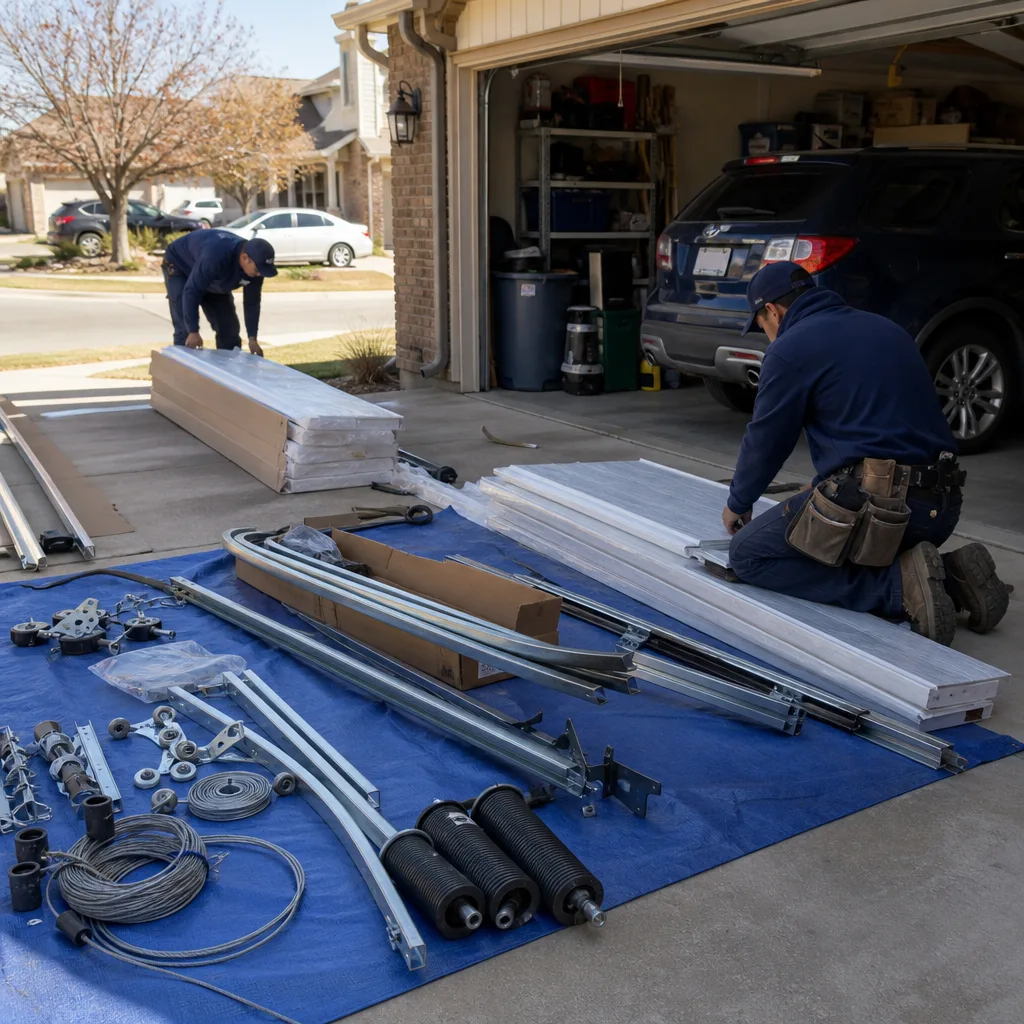
Material choice drives the price, the lifespan, and the maintenance load. Here is what actually works in a Garland climate, and what does not.
Steel is the default for good reason. A 25-gauge or 24-gauge steel door with a factory-applied polyester finish handles UV exposure, hail, and heat cycles better than anything else at its price point. Steel doors run $1,200 to $3,500 installed in Garland depending on insulation, gauge, and panel design. The downsides: steel dents under impact, and if the paint is scratched down to bare metal, it rusts. Touch up scratches with automotive paint to keep the rust out.
Aluminum is the choice for modern homes with full-view glass panels, common in the newer Garland builds along the PGBT corridor. Aluminum doors run $2,500 to $6,000 installed. They do not rust, which is a real advantage in our humidity swings and the occasional hail storm. The tradeoff is dent resistance. Aluminum is softer than steel, and a full-view glass panel is expensive to replace. Budget for that.
Wood is beautiful and wrong for most Garland garages. A solid wood door absorbs moisture during spring and releases it during August. The panels warp. The joints loosen. The paint cracks. A wood door needs a full refinish every two to three years in our climate, and even then, the west-facing doors on houses along Firewheel take a beating from afternoon sun. Wood doors run $2,000 to $8,000 installed and the maintenance cost deserves its own line item. If you want wood, know that it is a lifestyle choice.
Composite is the compromise. A composite door is a wood-look door made from fiberglass or vinyl over a steel or wood core. It gives the curb appeal of wood with much less maintenance. Composite doors run $1,800 to $5,000 installed. The panels do not warp the way wood does, and the finishes from brands like Wayne Dalton and Raynor hold up well in North Texas heat. This is the material we recommend most often to Garland homeowners who want the look without the upkeep.
Material is one of the three decisions that actually matter in a garage door installation in Garland. The other two are spring configuration and drive type. Brand matters less than all three combined.
How to Read a Garage Door Quote: Fixed Costs vs. Upsell Vectors
A garage door quote has three legitimate line items, and everything else is optional. Learning to separate them is how you avoid paying $1,200 for a job that should cost $450.
The fixed costs are the parts and labor required to solve the stated problem. A broken spring is a spring. A failed logic board is a logic board. These costs are the same from one honest company to the next, within 10 to 15 percent.
The disposal and haul-away fee is a fixed cost on replacement jobs. Old doors and openers go to the landfill, and someone has to drive them there. In Garland this runs $50 to $150 depending on the size of the door.
The upsell vectors are the line items that get slipped into quotes to pad the total. The most common we see:
- “Full system tune-up” added to a single-spring repair for an extra $200. A good spring repair includes checking the balance, cables, and safety sensors as part of the service call, not as an extra line item.
- “Lifetime warranty upgrade” for $150 on a part that already carries a manufacturer warranty. Ask what the base warranty covers before paying for the upgrade.
- “Heavy-duty rollers upgrade” recommended as a necessity on a 5-year-old door. If your existing rollers are worn, fine. If they are not, you are paying for an upgrade you did not ask for.
- “Same-day emergency fee” added after you called during business hours. Emergency fees are real for nights, weekends, and holidays. They are not real for a Tuesday morning call.
- “Required inspection” on a quote for work you did not request. Some companies use a low service fee to get in the door and then quote a full replacement on a door that needed an $80 sensor alignment.
The simplest filter: if a line item was not discussed before it appeared on the quote, question it. At Servo, our process is the same on every job. Clause 1 of The Haven Standard requires a flat, written price and written scope before any work starts. Clause 4 requires the technician to photograph the failed part before quoting a replacement. You see what we saw. If the quote says the spring broke, there is a photo of the broken spring.
You can bring any written estimate from another company and get a free second opinion from us. Bring the paperwork. We will look at the door and tell you whether the quoted work is necessary, partial, or overbuilt. That offer is standing, no coupon required, no code to mention.
A Garland Maintenance Schedule That Actually Works
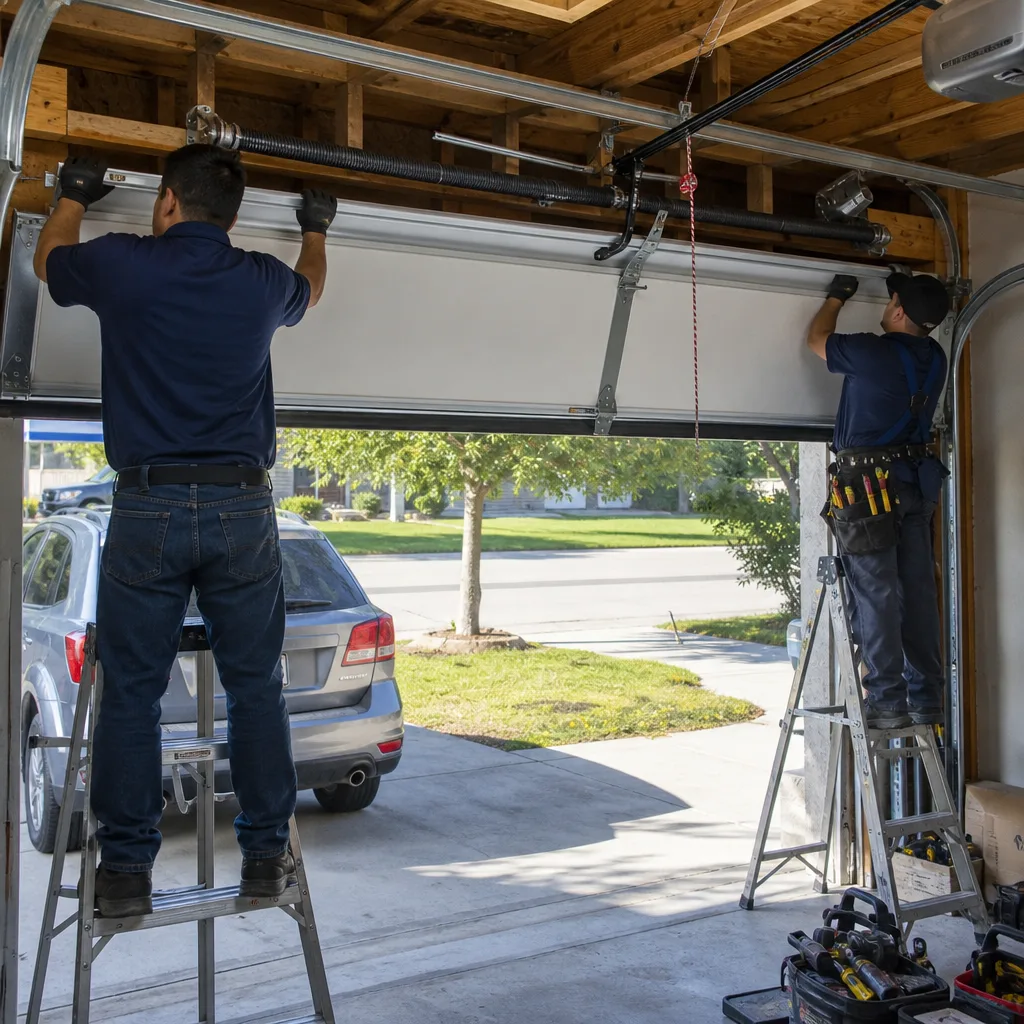
Most garage door maintenance guides are written by people who have never opened a garage door in Texas in August. Here is a schedule that accounts for our specific conditions.
Monthly, 2 minutes: Look at the door while it runs. Is it smooth? Does it hesitate, jump, or grind? Watch the rollers on both sides. A door that moves evenly is a healthy door.
Quarterly, 5 minutes: Test the auto-reverse safety feature. Place a roll of paper towels in the path of the closing door and press the button. The door should hit the roll and reverse within two seconds. This feature exists to protect your children and pets. Test it.
Twice a year, 15 minutes:
- Clean the photo eye sensors near the floor with a dry cloth. Dust and spider webs trigger false stops.
- Check the weatherstripping along the bottom. North Texas sun dries it out faster than northern climates. If it is cracked, replace it before summer rainstorms.
- Look at the cables. Fraying is fine until it is not. A single broken strand means the cable is weeks from snapping.
- Check the rollers. Plastic rollers crack in the heat. Steel rollers wear. If you see wobble or missing ball bearings, call a technician.
Annually, 30 minutes: Have the balance checked. Disconnect the opener by pulling the release handle, then lift the door manually. A balanced door stays at waist height when you let go. A door that drops or flies up has a spring problem. This is a two-person check for safety and it costs nothing. If your door fails this test, spring tension needs adjustment, and that is a task for a trained technician. Do not adjust springs yourself.
After every hail storm: Check the panels for dents. Garland gets hail often enough that this deserves its own line. Small dents are cosmetic. Large dents can affect the structural integrity of the panel and the seal around the door.
Common Mistakes to Avoid
- Choosing a door by brand instead of by configuration. Craftsman and Raynor both make good doors, and both make budget doors. The spring configuration and panel gauge matter more than the logo. A well-configured budget door outperforms a poorly configured premium brand.
- Ignoring spring configuration. Torsion springs cost slightly more and outperform extension springs on every measure that matters in Garland. This is not a place to save $75.
- Buying a non-insulated door for a garage under a bedroom. The noise transfer through an uninsulated 25-gauge panel is significant. If you live in a two-story Garland home, this is the single most common regret we hear after install.
- Not testing the auto-reverse feature. Most Garland homes have children, pets, or both. The auto-reverse sensors fail quietly, and a door that doesn’t reverse is a serious safety hazard.
- Delaying a cable or spring repair because “it still works.” A frayed cable works right up until it snaps. When it snaps, the door slams down on one side, which usually damages the panel and the track. The $150 repair becomes a $600 repair.
- Paying an upsell before questioning it. If a line item on a quote was never discussed, ask. Honest companies explain their quotes. Companies that pressure you to sign today deserve your skepticism.
- Using generic maintenance schedules from national sites. Garland’s heat, clay soil, and hail are local conditions. A schedule written for Arizona or Minnesota will miss the things that actually fail here, like heat-degraded plastic rollers and soil-driven track misalignment.
When to Call a Professional
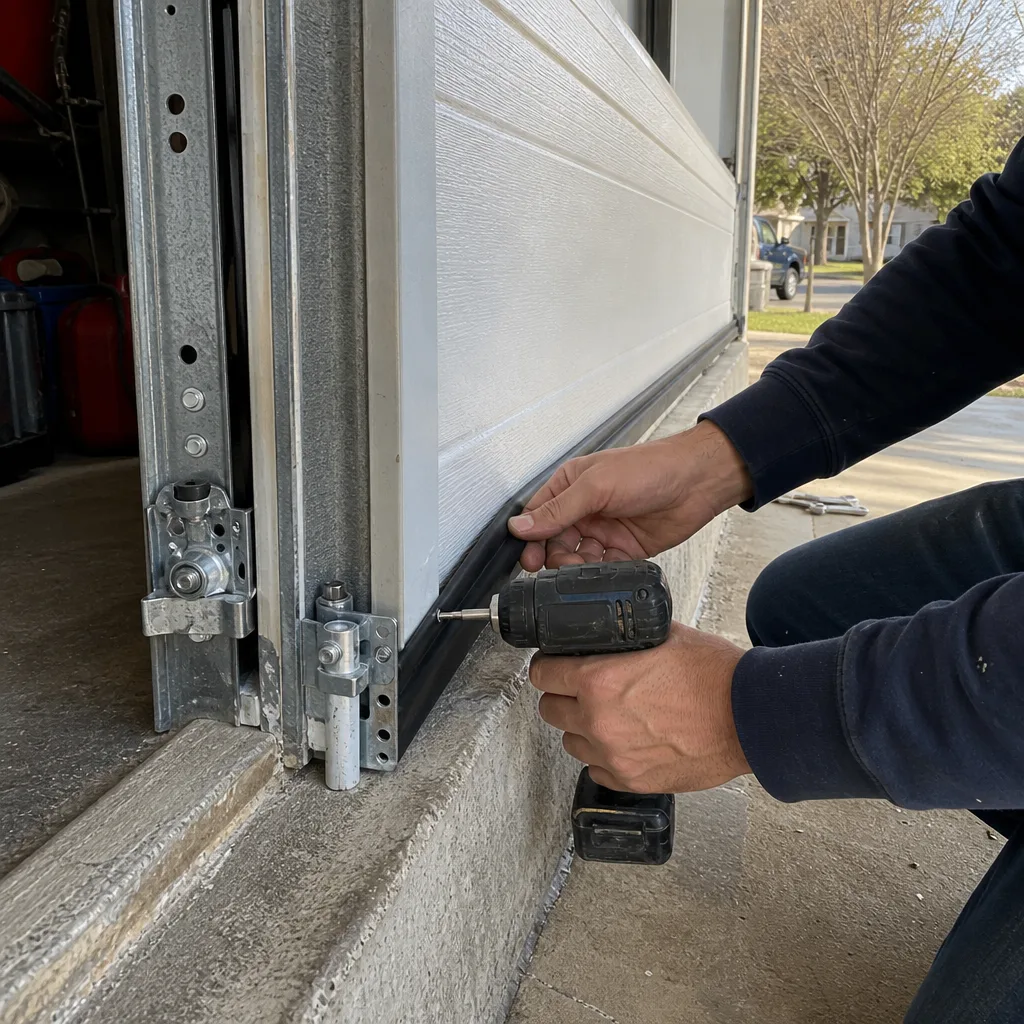
A garage door professional should handle spring work, cable replacement, track adjustment, opener logic boards, and any repair involving stored tension or electrical wiring. Springs hold enough force to cause serious injury, and openers combine line voltage with moving parts. If the door is off its tracks, if the springs are snapped, if the door rises unevenly, or if the opener makes a grinding noise and does not respond, call someone who does this work every day. In Garland, we have seen well-meaning DIY repairs turn a $200 problem into a $1,500 problem more times than we can count. Servo Garage Doors Garland offers free estimates with written pricing before any work starts, call (469) 949-6806 and you’ll speak to a live person.
Frequently Asked Questions
Most garage door repairs in Garland run between $150 and $450. A single torsion spring replacement costs $180 to $340, cable replacement runs $120 to $200 per side, and a logic board runs $130 to $220. We quote a flat, written price before any work starts, so the number on the quote is the number on the invoice. Call (469) 949-6806 for a free estimate in Garland.
No, not for springs, cables, or opener electrical work. Torsion springs hold enough stored force to cause serious injury or death if they let go, and springs and cables are the most common point of failure. Panel replacement, weatherstripping, and sensor alignment are manageable for a careful homeowner, but anything involving stored tension or line voltage should be left to a trained technician. The fastest way to turn a $200 repair into a $1,500 one is to attempt it yourself and put the door off its tracks.
A well-configured steel door in Garland lasts 20 to 30 years with maintenance. The springs last 7 to 10 years, the opener lasts 10 to 15 years, and the rollers and weatherstripping are on a 2 to 5 year cycle. The panels themselves are the most durable component, which is why it is often cheaper to repair the moving parts than to replace the entire door when something breaks. Our heat accelerates plastic and rubber degradation, so Garland doors need more roller and seal replacement than doors in milder climates.
Repair is the better choice when the moving parts have failed but the panels and tracks are intact. Replace when the panels are dented or rusted through, when the door is more than 25 years old, or when you want a material change, like moving from wood to composite. The math is simple: a new spring is $340, a new panel is $400, and a new door is $2,000 to $4,500. If two or more major components need work at once, replacement starts to make financial sense.
You generally know because the spring is snapped, and a snapped spring looks like a clean break, not a sagging coil. If the door will not open, if it opens a few inches and stops, or if the spring has a visible gap in the middle, the spring is done. Even if only one is broken, replace both. The unbroken spring has the same cycle count and will snap soon. Our technicians photograph the broken spring and show it to you before quoting a replacement, per Clause 4 of The Haven Standard.
The usual cause is heat-related track expansion combined with clay soil movement. The metal tracks expand in 100-degree heat, and the slab has already shifted slightly from moisture loss. The result is a door that binds partway up. If your door sticks only in summer and not after a rain, that is the classic signature. The fix is usually a track alignment, not a new opener. We adjust the tracks and lubricate the moving parts during a standard service call, $75 to $125 in most Garland neighborhoods.
The Bottom Line
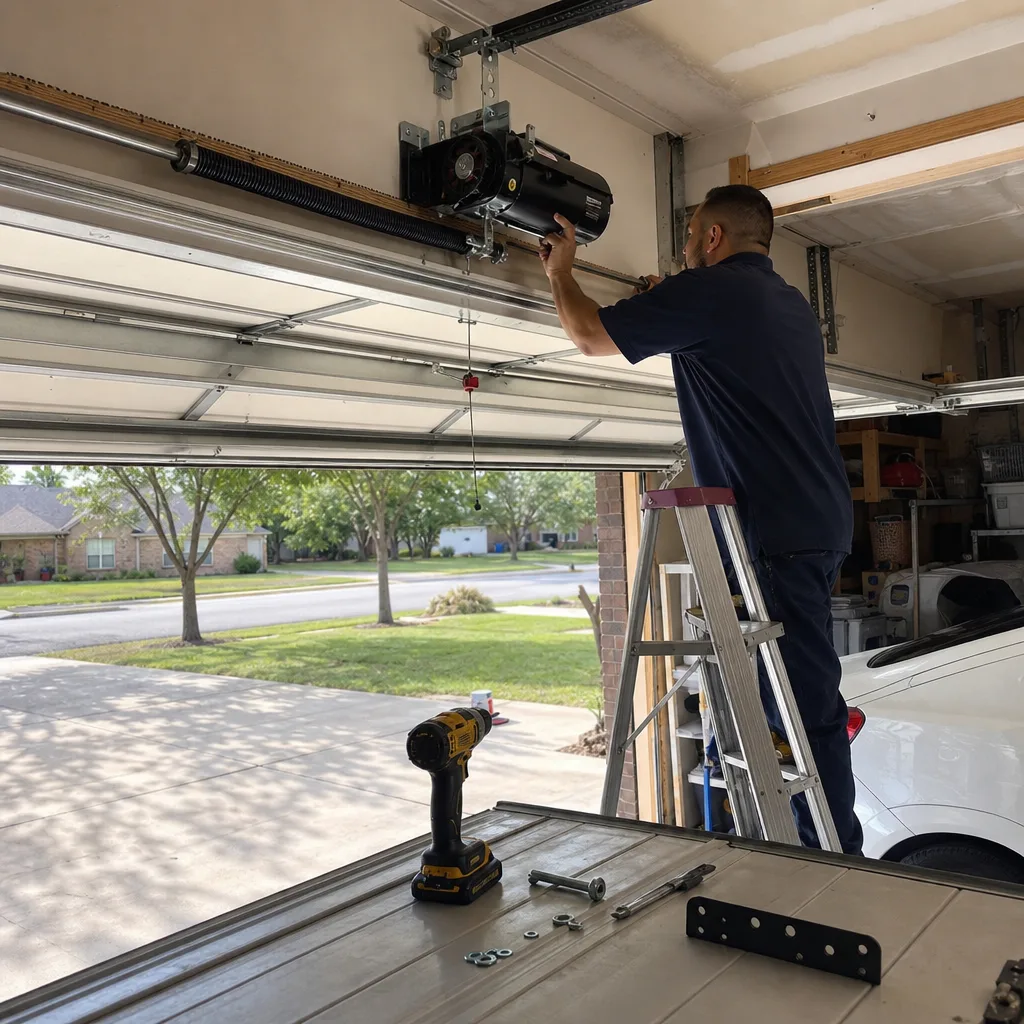
A garage door is a system, not a purchase. The three decisions that actually matter are material, drive type, and spring configuration. In Garland, material choice determines how the door handles heat and hail. Drive type determines how quietly the door runs and how long the opener lasts. Spring configuration determines safety, smoothness, and how often you pay for repairs. Get these right, and the door will run for 20 years with predictable maintenance. Get them wrong, and you will rebuild the system piece by piece until it makes more sense to start over. Servo Garage Doors Garland has been making doors right since 2015, every one with a written price before work starts and a documented record when we leave. For more on what we do, see our Servo Garage Doors Garland home page or give us a call at (469) 949-6806.
Written by Marcus Deller, Owner at Servo Garage Doors Garland, serving Garland since 2015.