
Full 25-point door and opener safety check with every visit - springs, cables, rollers, tracks, and your LiftMaster or Chamberlain opener included
You get a price before we start. It does not change when the truck arrives.
 Before
 After
After Before
 After
After Before
 After
AfterWayne Dalton Weather Seal Replacement: The Garland Owner’s Guide
The bottom weather seal on a Wayne Dalton door typically costs $110-$220 installed in Garland, and in most cases we can replace it the same day we arrive. If you’re seeing daylight under the closed door, feeling a draft, or finding leaves and dirt blown into the garage after every north Texas wind event, the seal has failed and it’s letting more than air inside. This page covers exactly how we match the right Wayne Dalton seal to your door, what it costs, and what you get when we do the work.
Key Takeaways
- Installed weather seal replacement for Wayne Dalton doors in Garland runs $110-$220, parts and labor included, quoted before we start.
- We stock Wayne Dalton-compatible T-style and bead-style bottom seals on the truck, plus the aluminum retainer channel when that’s rotted out.
- Texas sun and heat degrade garage door seals faster than the national average; if your seal is over 4 years old and brittle or cracked, it’s done.
- We’re an independent service provider, not affiliated with Wayne Dalton. We install OEM and quality aftermarket seals that match the original spec.
- Every visit includes a documented photo record of the failed seal before we touch it, per Clause 4 of The Haven Standard.
Which Wayne Dalton Models This Applies To
Wayne Dalton uses two dominant bottom seal profiles across its residential line: the T-style seal that slides into an aluminum retainer channel on models like the 8000, 8200, 9100, and 9600 series, and the bulb-style or bead-style seal found on the 8300, 8500, and older Thermowayne doors. The fastest way to confirm which one you have is to look at the bottom edge from inside the garage. If you see a metal channel running along the floor edge, it’s a T-style. If the rubber tucks directly into a groove in the bottom panel, it’s a bead-style. We photograph this before giving a price, because guessing at the counter is how wrong parts happen. For most Garland homes we service around Firewheel, Sachse, and Rowlett, the T-style on an 8-foot or 9-foot-wide door is the common setup. We carry both profiles in 10-foot and 16-foot sections, cut to length on site, in black and gray. OEM Wayne Dalton seals are available through our suppliers; for homeowners who want to keep costs down, we also install aftermarket seals that meet the same durometer and profile spec. We say which is which on the written estimate, with the price next to each.
Signs Your Wayne Dalton Weather Seal Replacement Is Failing
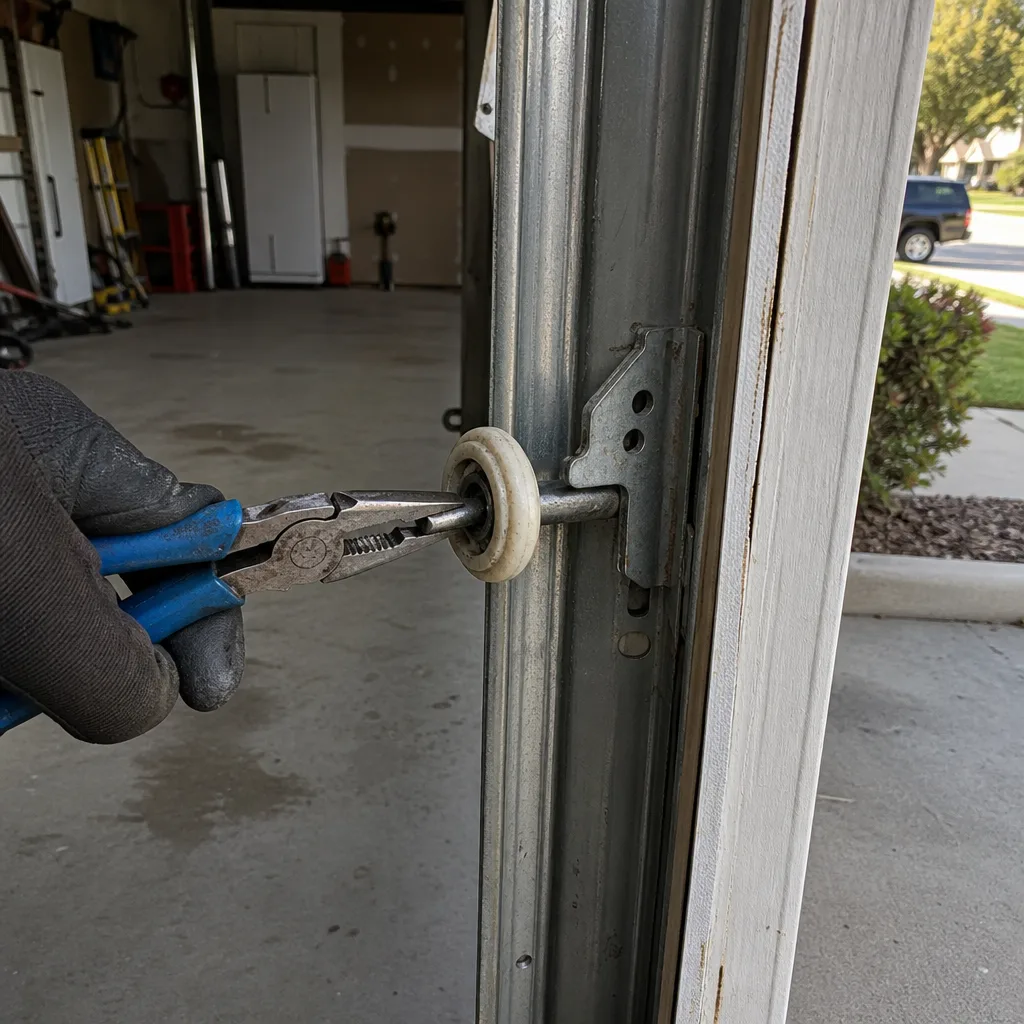
- Visible daylight under the closed door. This is the clearest signal. If you can see a gap of light along the garage floor, the seal has compressed, torn, or pulled out of its channel. The fix is a new seal, not an adjustment to the opener limits, which is what some people try first.
- Water pooling at the door line after rain. A failed bottom seal lets rain run under the panel and into the garage. North Texas storms push water hard against west-facing doors; a seal that’s cracked along its length won’t stop it.
- Leaves, dust, and dirt accumulating just inside the door. Garland’s dry, windy days move debris constantly. A worn seal leaves a consistent trail of grit and leaf fragments along the interior floor edge, which is one of the first things owners notice.
- Temperature swings and rising cooling bills. A failed seal breaks the thermal boundary between the garage and the outdoors. In July and August, that means warm air entering continuously and your air-conditioned adjacent room working harder. If the garage feels like an oven at 6 a.m., check the seal.
- Rodent or insect entry. Crickets, spiders, roaches, and the occasional field mouse find their way in through the gap at the bottom of a door. A tight seal closes off the most common entry point.
BeforeAfterReplacement Cost & What’s Included
In Garland, replacing the bottom weather seal on a Wayne Dalton door runs $110-$220 when we do the full job. The range covers the seal profile (T-style or bead-style), the material (standard vinyl or heavier-duty rubber), whether we’re also replacing the aluminum retainer channel, and the door width. A simple T-seal swap on a single door lands at the lower end; a 16-foot-retainer replacement with a heavier rubber seal for a two-car opening sits at the top of the range. Every quote includes the part, the labor, cutting to size on site, removal of the old seal, and a check of the door’s balance and travel once the new seal is installed. The price is written down before we touch the door, per Clause 1 of The Haven Standard. If the old retainer is still straight and only the rubber has died, we say so and quote the lower number. We don’t sell a new channel because it’s easier for us. The work is covered by our 365-Day Done Right Promise.
DIY or Call Us?
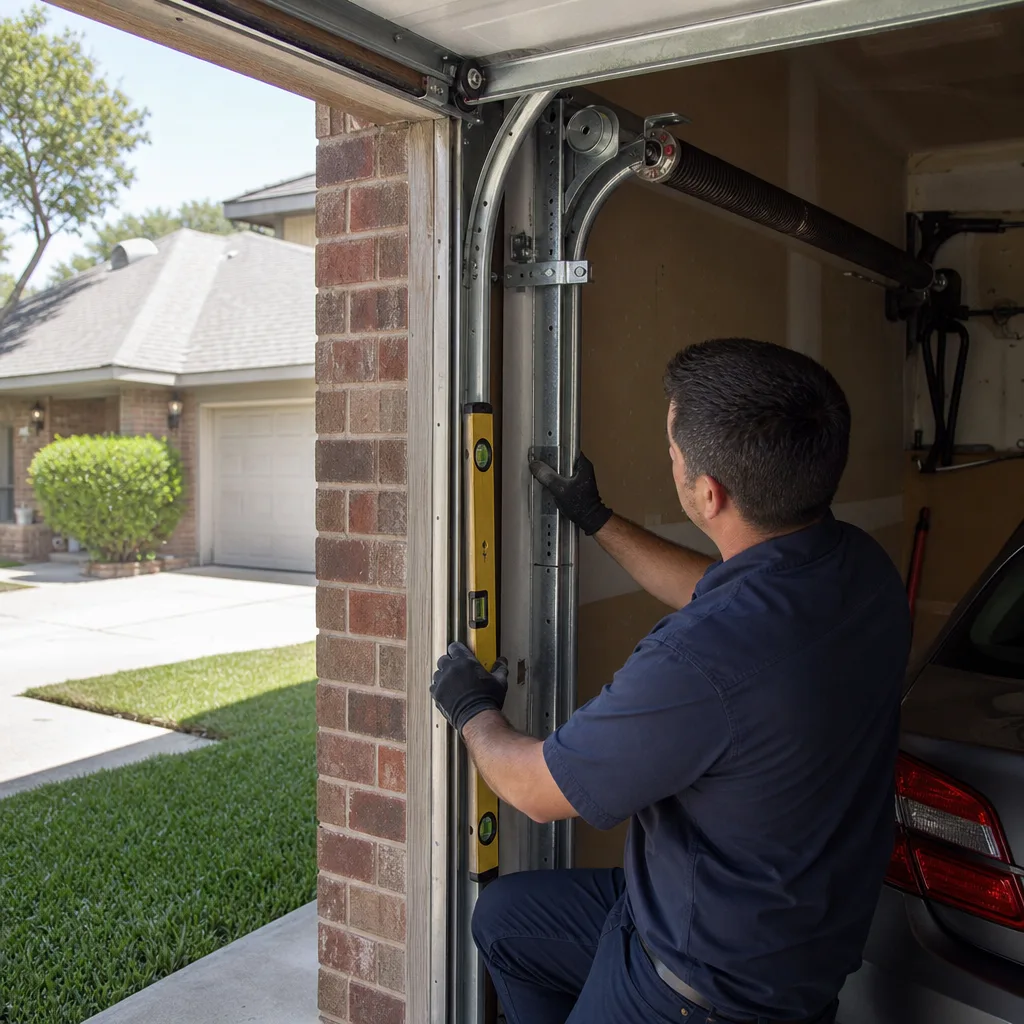
Replacing a Wayne Dalton bottom seal is one of the few garage door tasks that a comfortable homeowner can genuinely do. That said, the honest split is this: the physical swap of a T-style seal takes about 20 minutes with a pair of snips and a flathead screwdriver. What goes wrong is the diagnosis. If the seal is torn, but the door is also sagging at one corner or the opener is reversing off the floor, a new seal won’t fix the actual problem, and now you’ve spent an afternoon and still have a gap. If the retainer channel is bent or corroded, you need to drill out old fasteners on a door panel, which is a job that tests patience. We can also say plainly: nothing about this part is dangerous compared to torsion springs or cables. It’s low risk. What we charge reflects the time on site, the correct material from the start, and the photo record you receive before and after. If you’d rather not spend the weekend on the garage floor, call (469) 949-6806 and we’ll handle it.
FAQs
In the Garland climate, a Wayne Dalton bottom seal typically lasts 3 to 5 years before the sun and heat make it brittle, cracked, or compressed flat. Doors that face west or southwest, and doors with no shade over the driveway, wear out on the shorter end of that range because the sun cooks the rubber every afternoon.
No meaningful repair exists for a torn, cracked, or compressed garage door weather seal. It’s an extruded profile, and once the rubber splits or loses its shape, patching it with adhesive or tape lasts weeks at most. Replacement is the repair. That said, if only the rubber is bad and the aluminum retainer is straight and solid, we replace just the seal and leave the channel in place, which keeps the cost at the low end of the $110-$220 range.
A standard single-door Wayne Dalton seal swap takes about 30 to 45 minutes on site. If we’re replacing the retainer channel as well, plan for an hour to 90 minutes. The seal gets cut to the exact width of your door, then checked at both corners and along the center when the door closes. Our technicians carry seal stock in the truck, so there’s no second visit for parts in almost all cases.
We stock T-style and bead-style bottom seals in the common widths on our service trucks, along with replacement aluminum retainer channels. For most Wayne Dalton doors in Garland, the part is already on the truck when we arrive. If your door requires a specialty profile that isn’t standard, we’ll know it from the photo record we request before dispatch and we’ll order the exact match before we schedule the work. Call (469) 949-6806 for an exact quote, and we’ll walk through what we’re seeing.
Written by Marcus Deller, Owner, Servo Garage Doors Garland at Servo Garage Doors Garland, serving Garland and nearby areas.